The Monsterverse: Past, Present, Future? (part 2)

Warning: I am a verbose windbag.

Moving right along:
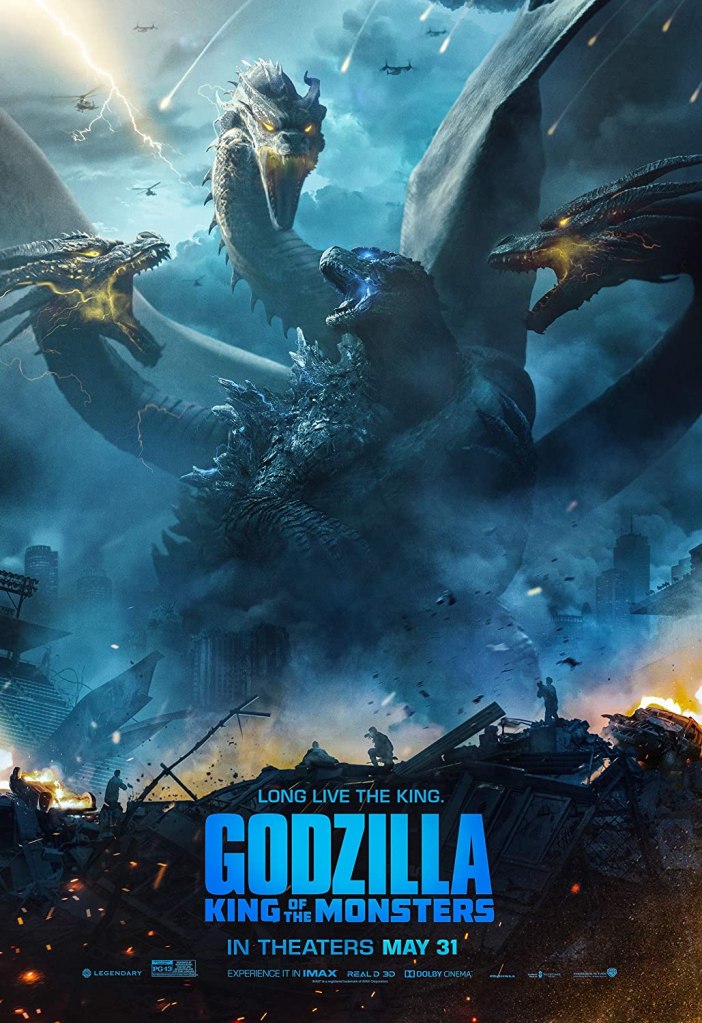
Hey everyone, let’s talk biases.

Godzilla: King of the Monsters was a poorly received movie, both by critics and audiences. It was a failure by any stretch of the word.

And I am about to praise it to high heaven.

And I feel like I shouldn’t have to give any kind of disclaimer about this. This blog is just my opinions, and while my opinions are obviously better than anybody else’s I am still just one person. But my point is, even more so than usual my opinion should be treated with a grain of salt. I am about to gush about why I love this movie, but by judging by the evidence you may not share my take. So there’s that.

I wanted to make that disclaimer because I am fully aware that my views on this movie are influenced by the fact that I am a Godzilla fan, and this movie is something of a fan pleasing course correction from the first movie. There is a far greater volume of monster action, the underwhelming antagonists of the first movie are replaced by popular Godzilla costars Ghidorah the three headed space dragon, Mothra the guardian insect of Earth, and Rodan the…large bird (I can’t make them all sound cool), and the plot relies more heavily on the pseudoscientific nonsense native to the franchise as opposed to the realistic military POV of the last movie.

That last part is where I think the greatest divide between a franchise fan and a casual viewer might occur. This movie is, frankly, filled with gobbledygook. This movie works on the conceit that radioactive monsters can heal the planet from the damage caused by pollution. This is the premise that drives the entire plot, it’s a conflict over whether or not humanity can coexist with the giant monsters based around that absolutely nonsensical idea. Honestly I don’t think it helped this movies case that it came out around the same time that HBO’s Chernobyl miniseries reeealy hammered home the realities of radioactive fallout in the most skin crawling (ugh, phrasing) way possible.

My point is that I am the kind of guy who can roll with this nonsensical premise and take the story at face value, while I think a lot of people can’t. And that’s fair.

That being said I don’t think me being a fan means I’m inclined to give this a fair pass. I have disliked plenty of movies based on things I like and I’ve engaged with plenty more based on things I have no investment in. I feel my love for this movie comes from it being a genuinely good Godzilla movie, and I am here to explain that belief.

There is one element to this movie, though, that undeniably drags it down; the editing. This movie is cut together to give it as quick a pace as possible. A good thing in theory, but the thing is that there is a significant difference between a quick pace and a frantic pace, and Godzilla: King of the Monsters really demonstrates what happens when that line is crossed. This results in the scenes with the humans lacking, well, humanity. The editing leaves no room to breathe, just fast cut exposition punctuated by the occasional one-liner from a side character then move on to the next plot bit. The audience doesn’t get to engage with these people, which is sad because it’s a colorful cast played by uniformly great actors.

This also negatively effects the monster scenes. This movie had some of the most incredible trailers I’ve ever seen, bringing to life a scale and beautiful grandeur that these creatures have never been able to be shown with before. In the movie the shots from the trailer are there, but like the human dialogue is cut to go so fast that you never really get to bask in it. And let’s face it, in a movie like this you can deal with the human material not being great, but if the monster sequences aren’t all they can be then we have a problem. When this movie came out I heard more than one critic compare this movie to the Transformers movies, and while I think that is a horribly unfair comparison I do at least see where it comes from, as this movie can at times feel loud and exhausting in the same way those turds are. The difference is while Transformers is designed to be obnoxious to trick the audience into feeling engaged, I honestly think King of the Monsters could have been a much more absorbing and even engrossing flick had it not been cut together so poorly.

That being said, the reason I still like this movie is because of the sense of grandeur that still survives. To begin with, the monsters in this movie are incredible. Godzilla’s already fine redesign is touched up, but the other three are where it’s really at, the top tier CGI allowing these monsters to shine in ways the classic suits and puppets never could. From Rodan’s fiery look and demeaner to Mothra’s luminescent beauty mixed with a graceful frame and a ferocious look, to especially Ghidorah’s outright satanic design…he easily benefits the most from the effects, given movement and personality that the old puppet heads could never achieve. I love how all three heads are made to have individual minds and personalities.
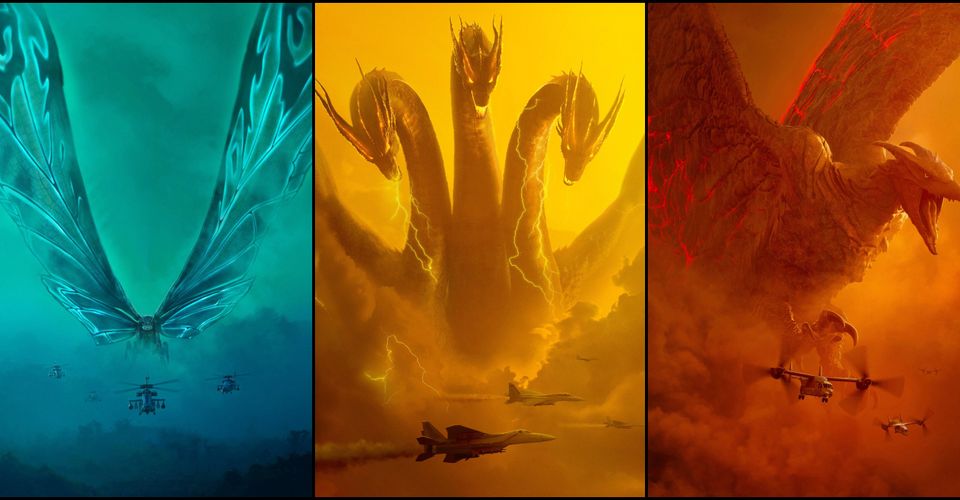
In fact, all the monsters get careful attention to personality, somewhat eclipsing even the human characters in that way. All you need is one look at Rodan’s permanent grin to know all you need about him. These creatures are always a joy to watch, even when their scenes become too chaotic.

I also just adore the style this movie goes for, just this shamelessly big Götterdämmerung of a thing, eschewing any idea of realism for sheer spectacle and size. The human side of things, while rushed and undercooked, serves the style well by being driven entirely by big emotions. This is a story where the fate of the world hangs on one family and how they are dealing with the grief of having lost their child. The story is driven by their emotional states, with Godzilla representing Kyle Chandler’s inability to handle his own emotions, a giant representation of his anger that he has to not get rid of, but come to terms with. Ghidorah is Vera Farmiga’s single minded drive to find meaning in her loss, a literal multi headed dragon that will wipe out everything in it’s path because it is a perversion of life itself, destruction that she rationalizes as necessary because if he isn’t than her suffering will have been for nothing, a prospect somehow bigger and more intimidating than the literal end of all life. Mothra is Millie Bobby Brown’s need to find peace, a mediator that is there to show these opposing forces the light, both helping keep Godzilla alive and in check and helping to destroy Ghidorah. Godzilla the pain that must be made peace with, Ghidorah the pain that must be overcome. And Rodan…is also there. All of this comes to a head in the sound and fury finale, Ghidorah’s storm contributing to the operatic feel of the whole thing.

Yeah by the way, all that? That’s why the frantic editing is the problem. Those themes and parallels end up buried by the constant river of movement and noise. A lot of this movies potential depth can only be appreciated with a deep reading that the movie does not encourage. I can’t blame anyone for missing all of this, and that is a damn shame.

Also I’ve heard fans complain about the darkness and rain obscuring the fight, but given the enormity of the aforementioned emotions I can’t think of a better setting for the battle. And what a battle it is, bad editing or no, this takes full advantage of not being held back by the limitations of suit effects, it is just spectacular.

I also can’t not mention up-and-coming master composer Bear McCreary’s amazing soundtrack. Implementing both the classic Godzilla and Mothra theme music and spectacular new compositions, often emphasizing the distinct style with a choir chanting the names of the monsters, somewhat blurring the line between classic grandeur and a modern sense of childish enthusiasm. The music in this movie is consistently perfect. My only complaint is that it is somewhat drowned out by the noisy sound design at times and that is god damn crime.

To conclude I would like to circle back to where I started and get into this movie’s central idea. I went into this movies conceit and how it’s dumb, but if I may elaborate; this movie sells the idea of these massive, beloved cultural icons not only existing, but being the solution to an unsolvable problem. This movie sells the idea that by coexisting with these monsters the damage mankind has done to the Earth can be undone and we can move forward to a better future, sharing the planet with these magnificent things. The antagonist of the movie is ultimately cynicism to that idea, from the governments of the world not believing such coexistence is worth the risk and seeking to destroy them, to Charles Dance’s eco terrorist organization seeking to make the monsters destroy humanity and rule the world in guaranteed peace. But the good guys learn, and the movie posits, that the best future is the most uncertain one.

This is obviously an idea with little real world application. Heck, it relies on the idea that lots of radiation will create more life, the literal opposite of reality. For a series that began as a metaphor for the fear and destruction wrought by nuclear power, one could say that moving in the direction of such fantasy is outright irresponsible, craven even.

But I think that ignores the rest of what Godzilla has been about. The franchise has increasingly become about exploring how Japan, and later humanity at large, deals with nuclear energy now existing. Godzilla quickly went from a devastating threat to something that existed alongside humanity. He was still dangerous but no longer something to be feared, instead a fierce power that protected Japan from foreign threats…a metaphor that became more specific as Japan quickly got caught between the increasingly dire wars of other countries.

Godzilla: King of the Monsters is far from the ultimate conclusion of this evolution; I have emphasized that the story is stupid and I maintain that. But I ultimately think it’s approach is a valid one. It presents a great escapist fantasy where the monsters we use to escape reality can also solve the problems that plague that reality.

So yeah. In this movie, Godzilla stops global warming. Maybe such a fantasy is irresponsible indulgence, but I guess it’s my irresponsible indulgence.

Well, That was a mouthful. What can I say, I have feelings. So now we’re done talking about the movies, on to the future.
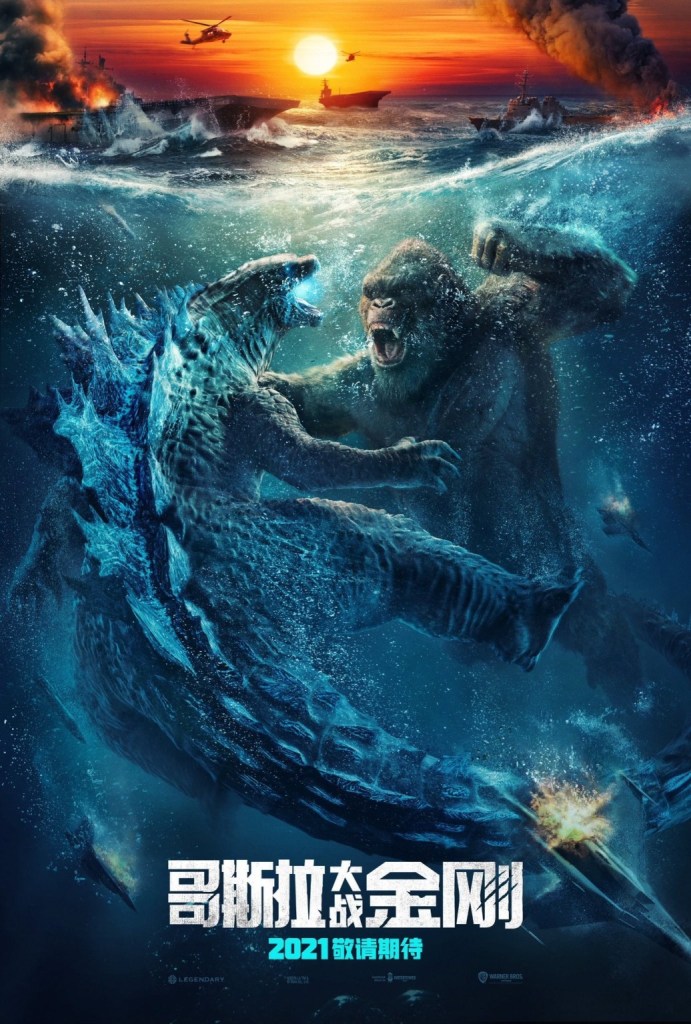
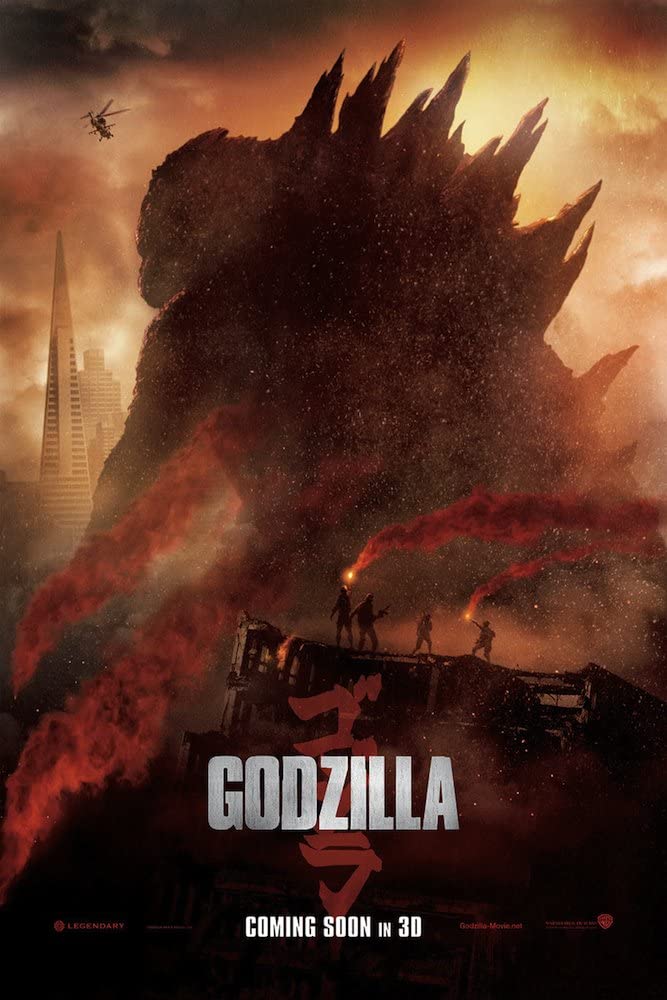
Because the Chinese poster is freaking awesome, that’s why.

I’m not going to speculate on Godzilla vs. Kong itself because I don’t want to risk accidentally giving anything away. There were major spoilers revealed about this movie over a year ago and pretending I don’t know about them would be disingenuous.

Oh, and to all the blogs and YouTube channels actively broadcasting said spoilers to the public? You are to humanity what Gabara is to the Godzilla series.
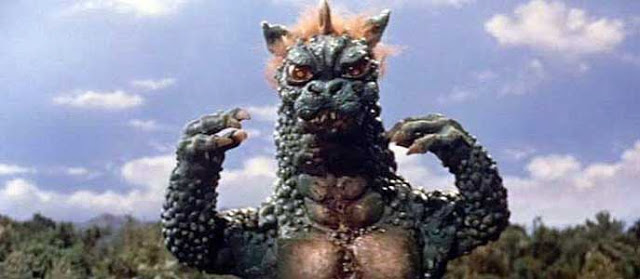
Because he’s the worst Godzilla monster. That’s the joke.

Anyway, on to the future of the Monsterverse.

The Monsterverse may not have a future.

Both Godzilla and Kong: Skull Island did good but not great at the box office and Godzilla: King of the Monsters was a flat out disappointment, probably owing partially to coming out just weeks after the one blockbuster to end them all, Avengers: Endgame. Given that Godzilla vs. Kong represents the end of the original stated plan for the Monsterverse I can’t really see the series continuing past that point.

That said I have been surprised by just how much interest there seems to be in Godzilla vs. Kong. The trailer gained more views in a matter of days than the Godzilla: King of the Monsters trailer has in it’s entire lifetime. There is considerably more buzz on social media. I suppose the central gimmick is just enough to grab the public eye. Whereas King of the Monsters was mostly sold on the inclusion of monsters that the general public has never heard of and has no reason to care about, there is certainly a draw to a fight between the most famous giant monsters in all of pop culture. This is compounded by the advertising smartly leaning in on this, treating it like a big wrestling match. On the other hand we’re still in a pandemic so sales can only be so well I suppose.

But let’s say it does do well. What then? How to keep making money off this franchise? And can we please keep making good movies while we’re at it for the love of god?

I think King of the Monsters has established that sticking to making more Godzilla movies and just adding more monsters from the Japanese movies is a no go. If Mothra and Ghidorah didn’t get any butts in seats than Hedorah or Biollante aren’t going to be any more successful in that way, even if seeing those monsters in big Hollywood budget-vision would probably be really cool.

I would opine that in this day and age Warner Brothers would be fools not to look into streaming options. Godzilla shows have typically done well, from the infamous Hannah Barbara cartoon to the surprisingly good animated spin-off of the Mathew Broderick movie. This makes sense, as Godzilla lends itself to a monster of the week formula and being an episode of television means cutting the fat of the story significantly, a real boon for a genre known for being filled with filler due to the realities of special effects costing time and money. So making a short-season, lower budget TV show for Godzilla has some potential.

I’d also say we need something other than monster brawls to set movies around, as the spectacle factor of that can wear off real quick, especially since big budget Hollywood CGI monster brawls, while more impressive than the old rubber suit action, also tends to have less variety. With man in suit brawls you tend to need to work around the limitations by finding creative new things for the monsters to do.

Sometimes, admittedly, not for the better

But the big blockbuster isn’t really allowed such creativity in the fighting. So I say, rather than allow that to come to dimminishing returns (like it already did), think of something else to do with the monsters. For an idea off the top of my head, maybe focus on the human/monster coexistence established at the end of King of the Monsters. Have the monsters stay benevolent through the whole movie and have a human antagonist threatening the peace somehow. It’s different, it would probably be lower budget, and you could really milk the imagery of humans just living with their giant monster friends, just try and tell me kids in particular wouldn’t flock to that.

I think in general marketing to a younger audience would be good thinking. Godzilla tends to be a series that gets you while you’re young, and I think aiming these movies at older already established kaiju fans is limiting your market a bit. Let’s face it, not a ton of adults see the appeal of Godzilla. So get that new audience. It actually looks like Godzilla vs. Kong might already be learning this lesson, as there are no less than 3 child actors in the lead cast, so maybe Warner Bros. is already catching on to this idea. But yeah, you can’t tell me the kids who make Marvel successful wouldn’t go to see a faster paced, more fun Godzilla movie.

Or, and this is pretty extreme, recognize that having four movies that range from pretty good to really good (I can’t confirm Godzilla vs. Kong will keep that momentum but the trailers look promising and the prerelease reviews have been good so I’m assuming it’s at least pretty good) is a pretty good track record and quit while your ahead.

Just a thought.

Yeah, if Godzilla vs. Kong is the end of the Monsterverse I can’t say that’ll be a particular bummer. Sure my monkey brain would like to see big budget Godzilla movies go on forever, but this has been a more solid run of movies than the young me that always wanted movies like this could have dreamed of, and letting it be a solid little bundle of films representing this series that means so much to me would probably be the best I could ever ask for.

Still, can’t help to keep hoping that the streak can continue. I guess we’ll just see.

Well, that’s all my thoughts on that subject. My utterly excessive number of thoughts. Sorry. I might make one more entry once I see Godzilla vs. Kong, We’ll see.

Also make a Mothra movie because she didn’t get enough screen time in King of the Monsters even though she was the best part of it.

The Monsterverse: Past, Present, Future? (part 1)

The Marvel Cinematic Universe has been a real double edged sword for the entertainment world, hasn’t it? On the one hand, you have the novelty of a series of consistently enjoyable products that all tie together in ways that are fun to follow. On the other hand, you have other film studios tripping over themselves to emulate Marvel’s success. Not only does this result in an oversaturated market, but the attempted franchises are basically always bad. In fact, I would say that the second best cinematic universe so far has been Legendary Pictures’ Monsterverse.

For those who don’t know, the Monsterverse is a shared universe of American blockbusters based primarily on the Godzilla franchise but also ties in other monster franchises like King Kong for good measure. And I will admit, calling it the second best cinematic universe right out of the gate is a little unfair, as it started in 2014 and only has three movies under it’s belt with a fourth on the way. But I think this is part of what makes it work better than the rest; it has yet to become as exhausting as the others.

One of the big problems with cinematic universes is that they tend to come out the gate with an already exhausting amount of works announced, all of which just seems funny when the first movie crashes and burns. The best example of this is from Universal Studios, who made multiple attempts to make an action franchise out of their classic monsters catalogue, only to crash and burn every time because, shock of all shocks, no one wanted to see superhero-style blockbusters out classy old horror characters, no matter how many big stars you line up in advance.

I used to think the Dark Universe was a tragedy. But it’s not. It’s a comedy.

The Monsterverse was far less ambitious, coming out the gate with a new reboot of Godzilla, welcome after the notorious Mathew Broderick-led disaster from 1998, then revealing a four-film plan that is now about to see it’s completion. My intention is to look over the three movies released so far, look forward to the upcoming entry and speculate on the future of this franchise, because baseless speculation is the bread and butter of nerd blogs and I need to get with the times, man.

So without further adieu, let’s start with;

I’ve already brought up the Marvel movies in comparison to the Monsterverse, But Godzilla reminds be of particular early entry in that canon, that being Thor. This is because both movies are good, but both also suffer from playing their concepts a little too safe. Both were good enough on release, but I’d argue hindsight has been kind to neither.

Of course, Thor has one attraction that Godzilla doesn’t; Thor, for all it’s faults, is a light comedy, making it an easy way to kill an afternoon. This is in direct opposition to Godzilla, which takes itself veeery seriously.

This didn’t necessarily have to be a problem. If you’ve ever met a Godzilla fan then you’ve probably heard them go on and on about Godzilla was originally a metaphor for the destructive power of the atomic bomb from a very dark and complex art movie about Japan’s lingering fear of atomic atomic power. Sometimes it seems like all some of them talk about. A lot of nerds are insecure like that. But anyway yes, Godzilla has that legacy and making a more serious minded movie is not out of the question.

The problem with Godzilla is that the original movie was dark and serious because it had something to say. It was a heavy piece supported by interesting characters who shouldered the complex themes. This movie, by comparison, is a pretty run-of-the mill blockbuster, with a plot that more reflects the simpler, sillier Godzilla films of the 1960’s. Because of this the movie’s grim, portentous tone and constant holding back of it’s own spectacle ends up leaving it quite empty. Trading in mindless spectacle is one thing, but replacing it with basically nothing is where the issue lies.

I should say that even with all these problems, Godzilla is not a bad movie. I would dare say the first act is fantastic, immaculately building up to the giant monsters, held up by Bryan Cranston acting his heart out as the initial protagonist desperately searching for the reason for his wife’s death (spoilers: it may have had something to do with giant monsters). But then the monsters are unveiled, Cranston is killed off, and the rest of the movie follows Aaron Taylor Johnson as his son, who is an EOD in the Navy so that the rest of the movie can play out as a fucking recruitment ad where monsters occasionally show up.

Seriously, this is the real problem with the movie; the main stakes are Johnson trying to reunite with his all American nuclear family through the chaos of the mostly offscreen giant monster attacks, stakes made problematic by the fact that both him and the family are made as arch and personality-free as possible so as to make the audience relate to them, even though that’s not how relating to characters works and I thought we had hundreds of years of storytelling to learn that lesson but oh well. So throughout the movie we get the pleasure following a man it’s impossible to get attached to walking around the aftermaths of the stuff we actually want to see, instead just doing his very important duties off to the side. Even more embittering is the memory of Cranston and how good and interesting he was. Seriously, Breaking Bad had just ended and you just decide not to use your best and most marketable actor to the fullest potential, what were you thinking?

But hey, the U.S. Military give subsidies to movies that make them look good and this is a niche franchise so we gotta make money somehow I guess.

So yeah, my point is that the monsters not having a lot of screentime is not the problem. Honestly I think it could have been plenty, the movie is loaded with quality money shots of the big beasties and the fight at the end is pretty satisfying (if horrendously lit, especially on the home release where the contrast is turned way too low), but the decision to fill the gaps between monster action with a whole bunch of nothing makes this a hard one to want to go back to. Hopefully the director never made another movie with a heavy, portentous tone but no themes and flat characters with nothing to invest that instead carried itself entirely on empty spectacle to no real end.

Oh. That’s unfortunate.

I just realized I never even went into the monsters themselves. Godzilla is a sufficiently made reflection of what he’s supposed to be, dad bod aside. The enemy monsters, the MUTO’s, exist I guess. They get the job done. For as uninteresting as the are the movie actually does manage to get a pretty good and varied fight in the end, and let’s be fair that is kind of the main thing to get right in one of these movies so that’s cool. To be honest the movie itself provides little to talk about. It’s fine and the flaws that hold it back are all that is really interesting to ponder on. The result is that I’ve probably made this movie sound worse then it is, but dems the brakes.

Moving right along;

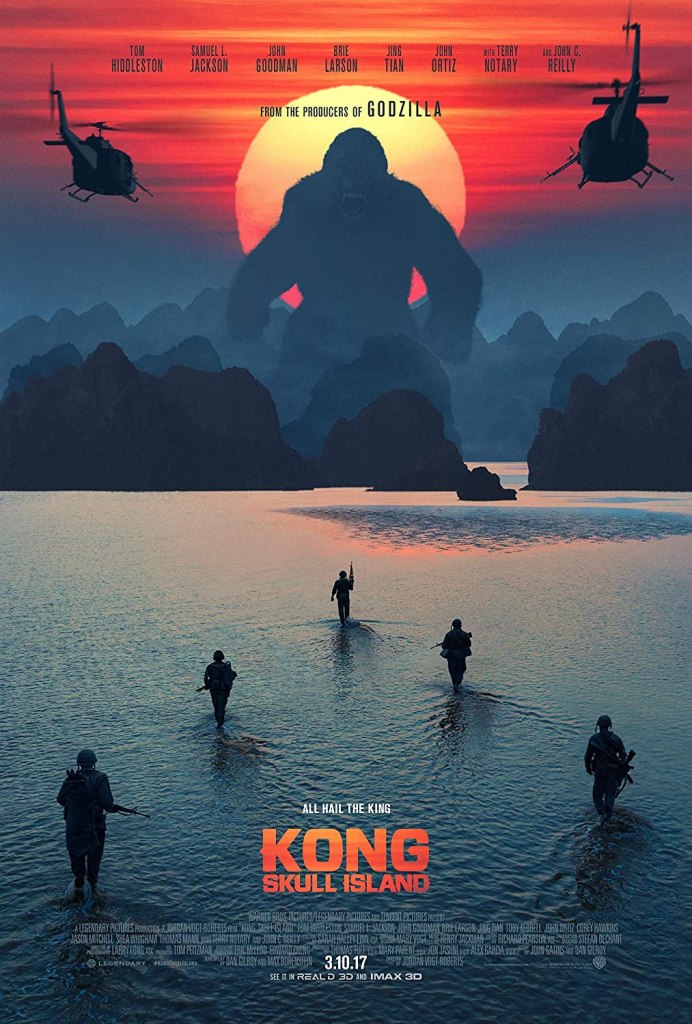
Kong: Skull Island is so good guys, like oh my god.

In direct opposition to Godzilla, Kong: Skull Island is an unapologetically unpretentious oldschool island monster romp, the kind that used to used line the shelves of video stores back when those where a thing but now made on a blockbuster budget. Yet also unlike Godzilla this one also has indulgences like themes and even the occasion fleshed out character. It’s just a whole package that I keep coming back to again and again.

In inevitable comparison to Peter Jackson’s epic remake of 1933’s King Kong, Skull Island feels more like a direct answer to the 1976 remake of the same movie, taking place in the same time period and filling in on the potential of that piece of crap. Whereas 1976 King Kong zeroed it’s focus on oil tycoons, environmentalism and celebrity culture (and mostly how they all sucked, seriously it is an unbelievably snotty and mean spirited movie for how shamelessly tacky and dumb it is), Skull Island focuses on the fallout of the recently ended Vietnam war.

And right off the bat, I will say that this is not a deep exploration of said war or it’s lingering effects on the 1970’s American consciousness. Those elements are there, but ultimately only serve as service level motivators for the characters. For instance, Samuel L. Jackson is playing a military colonel embittered by the shameful end to the war, while Brie Larson plays a war photographer, and as such is one of the people who helped end the war. This creates antipathy between the characters, but that never really goes anywhere. Still, it should go without saying that a lot of blockbusters can’t be bothered to think through their historical settings and how the characters should be informed by them to even that degree, so Skull Island is a cut above the rest by default. Three cheers for low standards?

But anyway, this setting informs the new take on Kong. Usually Kong is portrayed as the ultimate victim of colonialism, a godlike being who is carelessly torn away from his environment and destroyed by an American civilization that is more brutal and savage than he could ever be. In this movie the Vietnam stuff decontextualizes this dynamic. Kong is now seen as a new challenge for America’s wounded pride, with Samuel L. Jacksons character wanting to destroy him personally to make up for his perceived failure to win his war. Kong is titanic and indomitable enough that taking him down is seen as an accomplishment equal to his previous overseas conflict.

It’s no coincidence that the movie somewhat cleans up the Kong mythos. The natives of Skull Island, usually portrayed in a very negative light, from the blackface caricatures of the original movie to the weird monster people of Peter Jackson’s take, are here a more grounded and thoughtful take on a civilization untouched by colonialism. They peaceful and technologically accomplished, not even needing language to communicate. This also extends to the island wildlife, much of which are titanic, unthinkably beautiful ancient creatures that create a convincing ecosystem, rather than the chaos of destructive dinosaurs of most versions. Even the predatory creatures are fascinating parts of this ecosystem, and seemed not to be bothering anyone before these outside humans bumbled into their habitats and shot at them. Skull Island takes the eponymous place away from the colonial “lost world” myth and turns it into the fantasy of a piece of the world untouched by so-called “civilization”, a fantasy that would would be further explored to mainstream acclaim the next year in Black Panther.

Kong is turned into the guardian of this place, protecting it with loving ferocity both from the American soldiers who seek to tear it down for the sake of the top dog mentality that their country has so thoroughly beaten into them as well as the domestic threat of the reptilian Skull Crawlers. Unlike Godzilla‘s MUTO’s, a decent but arbitrary threat, the Skull Crawlers are a more thought through beast, the definition the apex predator, creatures from the depths of the Earth itself who would destroy the whole ecosystem of the island if not for Kong controlling their population. Admittedly the movie might have served better without them though. As I’ve alluded to the human antagonists are what give the real thematic meat of the movie, while the Skull Crawlers are just fodder for the obligatory monster fights. On the other hand they are some damn fine monster fights, particularly being the rare CGI monster movie to have all it’s fights take place in broad daylight (many use night time to cover up imperfections in the effects). The finale manages to be a fun and thrilling cap to the movie after the business with Jackson has been squared away. It helps that Kong is brought to life wonderfully, more animalistic that Andy Serkis’s version in the 2005 movie but still a likable, sympathetic character you easily root for as he fights both the gross enemy monsters and the arrogant humans. And let’s face it, seeing Kong encounter humans who mean him wrong and seeing him come up on top is just cathartic as hell after all these years.

But enough with the thinking crap, let’s talk about how this movie is durn purty, ya’ll. This movie frankly has no right looking as good as it does. Director Jordon Vaught Roberts goes above and beyond what is necessary. Skull Island bucks normal blockbuster conventions but being a well lit and colorful feast for the eyes. Apparently Hayao Miyazaki movies were a visual inspiration, and this really does come as close to visualizing that kind of pastoral beauty to live action as I have seen. The fact that such visual consideration was put into this dumb monster movie is the kind of thing I want to see encouraged, I want to see more directors do the best they can no matter what the project is, because it can really elevate the movie into a genuine classic.

I think I may have gone the opposite route of Godzilla and overhyped this one just a bit. It ultimately is just a monster movie, but it is a damn fine one that went out of it’s way to be everything it could be and I think that deserves my enthusiasm, damnit.

And hey, look at that, this ran long again. So you know the drill, rest of the article as fast as I can, hopefully before Godzilla vs. Kong comes out. ‘Till then, dear reader.

Crap, I didn’t even mention how good John C. Reilly is in Skull Island. How did I forget that, he’s like the heart and soul of whole thing, He’s so funny and sympathetic, what is wrong with me?

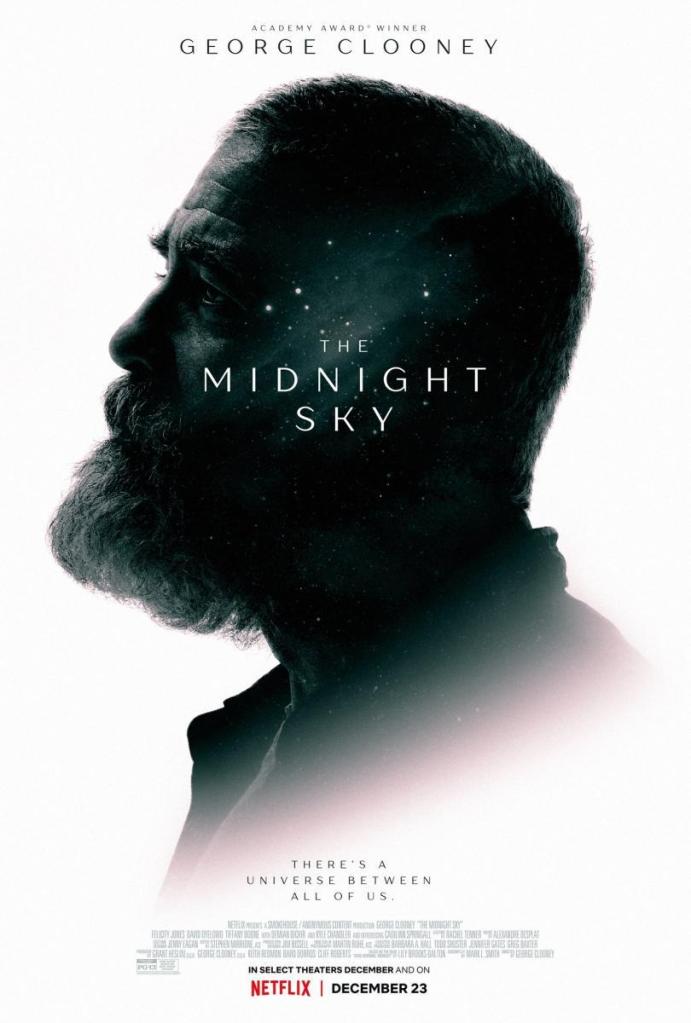
The Brilliant Innovation of The Midnight Sky?

I have just seen a film. A magnificent film. A true work of innovation, given to us by none other than one of our most beloved living actors.

On top of his stellar acting career, king of cool George Clooney has also directed several films, often quite good ones, sometimes even great ones such as Good Night and Good Luck, one of my personal favorite films of all time. But today I am not here to simply review a film, for mere review cannot do this work justice. I am instead here to spin a sonnet, one dedicated to the Netflix masterpiece; The Midnight Sky.

Mr. Clooney isn’t just a good director, but an inspirational one. For one, he sometimes eschews the traditional three-act structure that such plebeians as Steven Spielberg or Martin Scorsese tend to be bound by. This was done well enough in Good Night and Good Luck, which, being a film about conversations and rhetoric, itself kept a conversational pace. The Midnight Sky, however, further innovates with the bold decision to replace the three-act structure with…absolutely nothing.

Experimenting with pacing? HA! Try no pacing at all. Take that, Kubrick you hack!

What will truly touch the audience and put them in tune with the plight of the characters is to make the film a succession of things just kind of happening, going from introspection to action without so much as a facsimile of rhyme or reason.

Oh sure, the movie starts traditionally enough, with George Clooney’s character alone in an arctic base, maybe the last man in the world waiting to die. It is a setup that begs for both an interesting and unique character piece as well as any actor/directors dream, the kind of self-indulgence that the Oscars would trip over themselves to award. And it would be earned, it is a masterpiece in the making. Some would say it is a crime to waste such a cool idea for something more tried and true.

But Clooney doesn’t settle for taking advantage of a unique and interesting premise. Instead, he quickly adds a little girl, turning this from a movie about the sole remaining human allowing himself to waste away to a movie about a grizzled, tortured man rediscovering his humanity by becoming the father figure of a child of whose innocence is waning in this dead world.

Because that…

Has never…

Been Done…

BERFORE!

…I’m sure it’s brilliant this time.

So anyway, Clooney and the little girl have to journey through the arctic to contact a space exploration vessel and tell them not to come back to Earth, which is ravaged by radiation. Why is it ravaged by radiation? Some lesser films would give a quick explanation, maybe tie it in with the character’s plight, like perhaps it was a result of man’s hubris and the exploration vessel needs to make a new start, or maybe it was some random cataclysmic event, the Earth itself basically getting a terminal disease just like Clooney. Fast, efficient and effectively depicting the global stakes through the arc of the characters.

SOME movies would do this. But in another brilliant innovation, the movie instead simply doesn’t explain at all what happened. A cynical person might decry this as naked apathy on the part of the storyteller, but I choose to believe there is some grand point being made about the futility of details. Humanity is done, the Earth is uninhabitable, that’s all you need. It couldn’t possibly be laziness. That’s an absurd idea.

Speaking of the exploration vessel, here we get a full cast of top level Hollywood talent. We get more bold storytelling decisions, as long stretches of movie are spent with the characters having long conversations that communicate absolutely nothing to the audience. Again, many films would use dialogue to build empathy with the characters and let us know who they are so we can want to see them succeed in possibly starting the new humanity. But we’re here to innovate not reiterate, so instead the characters remain one dimensional all the way through, given maybe one character trait each so that their nonsensical decisions at the end can make sense.

Sure, maybe Kyle Chandler and Demián Bichir’s characters returning to Earth to despite knowing they’ll die a horrible death SEEMS nonsensical, but they kept rambling about their families so it makes sense, yeah?

In fact, there is another layer to this; one could say the people on the ship reflect the audience, with Felicity Jones and David Oyelowo being the people who see the genius of this film and leave ready to start a whole new life, unable to go back to where they used to be, such is the enlightenment that comes with this work.

Meanwhile, Kyle Chandler and Demián Bichir represent the rest of the audience who just don’t get it, opting to die a slow burning death from radiation poisoning because that sounds better than watching this ouroboros of tedious nothingness for even one more second. Not that I could relate, obviously.

The layers of subversion are without limit. Federico Fellini? More like Federico FAILini amirite?

It should also be noted that Clooney has clearly learned from his betters. He notably starred in Gravity, made by top-of-the-line filmmaker Alfonso Cuarón, and in a lengthy sequence emulates that movies thrilling disastrous spacewalk. Not only does Clooney start the sequence with an endearing scene of all the characters singing a full pop song that surly would not make any audience member yearn for the sweet embrace of death, but then comes the real innovation. See, where Gravity held itself to normal standards by having it’s sequence be full of nails-in-your-seat tension and thrills, Clooney chooses to instead have Astronauts stuck in space avoiding deadly debris have all the thrill and tension of nearly stubbing your pinky toe on a rock but then you don’t. But then you find out you did stub your pinky toe just a little. And that’s a bummer.

See, it’s like real life. What’s more thrilling than real life?

Mr. Clooney also looks to the career of one M. Night Shyamalan, surly a director worth emulating, as he ends his film on not one, but two twists. Ah, but you see in the early days of Shyamalan’s career he would use plot twists to further the character based stories he was telling, giving a final revelation that recontextualized the entire story and hitting Bruce Willis (for it was always Bruce Willis) with devastating information that changed the context of everything he had learned from the rest of the story. It was a final jolt to the audience that didn’t just surprise them, but made the whole story one to remember forever.

Since this method has been so thoroughly established, The Midnight Sky eschews it, instead not only making one twist both insultingly predictable and yet landing with such a lack of impact or consequence that you wonder why they even bothered having it, but a second twist that actively detracts from the movie, making half of Clooney’s actions now completely pointless. And as I said these scenes were already big bags of nothing to begin with, so with one reveal Clooney successfully manages to make half his film actually less than nothing. The absolute mad lad. François Truffaut is swooning in his grave.

All of these elements come together to make The Midnight Sky one of the greatest works of subversive genius in the history of science fiction.

I mean, it must be, right?

Because if it isn’t than this would be one of the most insulting movies I’ve ever seen in my life. A vacuous void of a film that revels in it’s own lack of…anything, really. The total lack of characterization, theme or message, the refusal to take advantage of the genuinely interesting ideas presented in favor of overused cliché’s presented with great importance but zero innovation or interest. It would be all the self-important emptiness of a Zack Snyder movie but with all the excitement of an episode of Murder She Wrote.

And that just can’t be the case. I wasn’t being sarcastic when I praised Clooney, he has made some great and innovative films, he couldn’t have possibly made on the most unimaginably awful waste of potential in a sci-fi movie I’ve seen since Prometheus.

Right?

The Godfather Part III: Can it be Saved?

Since I tend to be the last to the party with most big film news I have only just learned about The Godfather Coda: The Death of Micheal Corleone, AKA Francis Ford Coppola’s attempt to redeem the albatross around the neck of his most enduring cinematic achievement.

And look, I don’t want to come of as cynical…

HA!

…but I just can’t see it working.

First of all, this isn’t the first time Coppola has done a major re-edit of one of his films. The most significant example was Apocalypse Now: Redux, which took the…novel approach of taking a great movie and adding actual hours of extraneous fluff that bring nothing but constant reiteration of the themes the original version communicated quite effectively, in effect turning the once very powerful film into an agonizing endurance test. I would love to understand what was going through Coppola’s head when he decided to spend untold time and money to make his masterpiece terrible, but even if I had it explained to me I’m not sure I could comprehend it. It should say everything that he recently released a “final cut” that was significantly shorter. But at that point where does it end? You can’t have more than one definitive edition, by the definition of the word you just can’t, YOU CAN’T DO THAT FRANCIS! WORDS MEAN THINGS, YOU CAN’T JUST KEEP…

…Ahem. Moving on.

But more significant is the issues with The Godfather part III itself. I don’t know how controversial it is to say now but The Godfather part III is a pretty bad movie. But this time I don’t want to go into that. I could talk about the the the story is absurd in a way that does not compliment the natural flow of events from the previous two movies, or how the acting is uniformly so over-the-top as to reduce the film to self-parody at points (this was the point where Al Pacino had started playing Tony Montana…and then never stopped). But that’s not the real issue with this movie.

That being said…

NYAAAAAAAA! ACTING!

I feel I can safely say that The Godfather sit’s comfortably as one of the greatest movies of all time and The Godfather part II sits right by it as one of the greatest sequels. But what I think is underrated is how that was not a given. The Godfather is a story that is satisfyingly finished at the end. We have watched the near downfall of the Corleone family and Micheal losing himself in order to preserve it. If you told me back then that there would be a sequel where we spend three more hours watching Michael fall further, I would argue that that is not necessary and that it could only dilute the perfectly told story of the original. But lo and behold, Coppola really did manage to find every last bit of story there still was to tell, and now the first two The Godfather movies really do feel like two halves of a greater whole.

Then came part III, made almost twenty years later because Coppola’s star had fallen and he needed a guaranteed success. Not a great place to start from but great movies have been borne from cynical places before. But that is not what happened here. While part II managed to naturally continue the story and satisfyingly wrap up hanging threads like Micheal’s wife slowly breaking her naivety and his brother Fredo’s increasingly destructive incompetence, part III’s greatest sin is that it’s just a run-around. Character beats and plot points return and continue just so that they can end up going right back to square one. Notably Micheal and Kay begin to reconcile, which is absurd enough after what happened in the second movie but they end up being torn apart by Michael’s life of crime once again.

The second movie ended with Michael alone, having lost, driven off, or killed all his family. We are left in his position, left to reflect on how disgusted his father Vito would be with him, having flashed to to Vito’s uprising and seen how he became a crime boss entirely to protect his children. Coppola said that his intent with part III was to see Michael properly punished, but I’d argue that part of part II was a far stronger punishment than simply seeing him die alone because of a bizarre string of contrivances. It’s three hours of piling on to the ending of part II. This is really what makes it such a bad movie; it adds nothing. At the end of movie two Micheal drove Kay off and killed Fredo and had to live with that. At the end of movie three he lost Kay again, Fredo is still dead and he still has to live with it. Then he dies old and alone. The last scene is the only one that adds anything, and frankly I could have inferred that this was his future on my own. How else was Micheal Corleone ever going to die but alone? Did we need a whole three hour movie just to see that?

I feel like I’ve been here before.

So no, I don’t see how this new cut can be much of an improvement. Sure, maybe it will be a less bad movie, maybe even an enjoyable one in it’s own right. I don’t know how a re-edit can fix a bad plot and bad acting but I’ve seen some pretty drastic repair jobs in my time. If Kingdom of Heaven can be turned into a great movie than anything is possible. But The Godfather part III is parasitic by nature, and I just don’t see how that can be fixed. If your going to continue one of cinema’s greatest stories you had better really have something to add, and part III just doesn’t.

I’d argue the best thing about this version already is the title, which goes out of it’s way to distance this movie from the other two. It’s not Part 3, it’s the Coda. It’s the epilogue to the real story. Still no good reason to watch it but at least it’s more honest. That is, in fact, something.

The Troubling Blah Blah James Bond Daniel Craig Let’s Finish This Already

No, YOU can’t commit to a simple project.

The Daniel Craig Bond series now has two movies on opposite extremes of quality; masterpiece and dumpster fire respectively. I was nervous about the next one. Could the series really recover from a misstep like Quantum of Solace?

The answer turned out to be “Yes. Yes it can.

Granted only for a minute. But it’s a damn fine minute.”

I said before that Casino Royale might be the best Bond movie but it is not my favorite. That is because Skyfall is my favorite Bond movie. It’s so good I’m not going to waste time going into it. Suffice to say it is the perfect blend of the darker character exploration of the new movies and the sheer joyful energy of the old and the result is a perfect popcorn flick; certainly not one of the best movies ever, a derivative work to be sure, but still a sublime way to kill two-and-a-half hours.

And the Spectre happened.

I’m not going to lie; I really hate this movie. So instead of going on another long rant like with Quantum of Solace I’m going to make this a list of bullet points connecting my issues with the movie to my issues with the current series so I can stay on topic. Here we go:

  • The single most obnoxious thing about Spectre is that it tries to tie in with all the previous Craig Bond movies and turn the whole thing into a big tapestry where everything that happened was all planned by SPECTRE leader Ernst Stavro Blofeld. Problem is that since this was not planned while the previous movies were filming it ends up making no sense of Blofeld could have accounted for any of what happened in them. This wouldn’t be too big of a problem except that it is brought up constantly throughout the second half of the movie. The movie never allows you to forget that it is forcing itself to be the culmination of all that has come before. So not only is the storytelling dumb and lazy, it’s also impossible to look past the fact that it is dumb and lazy. It just keeps beating in every insulting plot point over and over. This is made even sadder by the fact that this was done partially because it was looking to be Craig’s last movie, so they really tried to wrap up the whole story that didn’t actually exist, but now that he has one more on the way this just seems like even more of a waste of everyone’s time.
  • Speaking of Blofeld, woof. Christoph Waltz is a top tier actor, but something went wrong here. Waltz’s only note is quietly smug self-satisfaction, a note which quickly runs dry of intimidation and instead just becomes irritating. The worst thing a villain performance can do is leave the audience unconvinced that the bad guy can actually live up to any of his threats, and frankly at no point does Waltz come off as even a little threatening. It doesn’t help that we’re seemingly meant to believe that this man built the most powerful international crime organization on the planet…in order to get back at his old foster brother for taking his daddy’s attention. No really, this is the backstory we are sold. In this universe, James Bond and Ernest Blofeld are foster brothers, Blofeld was annoyed at his dad’s attention being taken, and SPECTRE as an organization is predicated on hurting Bond as revenge. I feel like I shouldn’t have to explain why this is asinine.
  • Lea Seydoux is in the same position as Waltz, a fantastic actress giving a dull performance to a nothing character. Madeline Swan may be the worst Bond girl in franchise history. I can think of Bond girls who have been annoying, extraneous, excessively objectified or any number of issues, but every single one of them I can find some redeeming value in. Swan’s major problem is that she is just boring, both from a writing and performance standpoint. The problem is that everything about Swan is utilitarian. Every scene with her is exposition about her past, her connections to other characters, and her thematic connection to Bond, all without ever giving the audience a reason to care. The film is palpably afraid of creating another “Bond girl”, instead trying to sell the idea that Bond has found true love again, but without any of the character investment or chemistry of Vesper Lynd. Instead the romance is used as a vector to sell the next dumb thing:
  • This movie has a strange fascination with the idea that Bond being Bond is a bad thing and he cannot be a complete person until he stops. I feel I should not have to spell out the problem with a James Bond movie wagging its finger at the main character for being a super spy who kills megalomaniacs to save the world, but here we are. I get that the argument here is that maybe this makes Bond a more three-dimensional character, but here is the issue with that; first off, James Bond is just not that malleable a character. Now, you can give him interesting characterization, both Casino Royale and Skyfall managed that by exploring his limitations, both mental and physical and how they affect his work. But that was exploring his established character. This movie flat out turns Bond into something he is not. In fact, I can tell you exactly what it turns him into; Spectre turns Bond into Batman. A trauma victim unhealthily dealing with his issues through a deeply unhealthy endless mission that consumes him fully that can only be healed when he lets go and settles down with a bland love interest. So not just Batman, but specifically Christopher Nolan’s Batman. And that leads us nicely into a major problem:
  • This movie is not trying to be a Bond movie. It wants to turn the Bond series into a superhero franchise. To be clear, this didn’t start here. The Nolan Batman influence has been noticeable throughout the series, in particular Skyfall too a lot structurally from The Dark Knight, but here the influence of the genre takes over completely. Like I said before, the main goal of the movie is to turn the series from Casino Royale onward into an ongoing narrative. This is bad enough, but even worse is that it tries to turn James Bond into the center of the universe. Like I said, the big reveal is that the whole of the SPECTRE vs MI6 plot turns out to revolve around Bond; Blofeld wants to take down MI6 because that’s where Bond works and that will hurt him. Bond is no longer the vector through which we the audience interact with a big and interesting world…you know, the entire appeal of the series…now instead the world is responding to his existence. All the evil he has stopped exists in response to his all-consuming angst and inability to cope with personal tragedy…you see why I compare this to Batman.
  • Even more specifically, the B-plot of this movie is specifically a blatant knock-off of Captain America: The Winter Soldier. Except, you know, bad. To wit: Spectre is an organization that has connections in every major government and organization in the world, and their endgame is to gain access to all the worlds surveillance technology so they can more efficiently run their crime empire. Here’s the difference between this and The Winter Soldier though: in Spectre, the threat of the movie is that this organization is going to gain access to global surveillance and use it to spy on people. That’s it. No plan, no big endgame, the only threat that the movie sells is that people’s private information may end up in the hands of villains. Meanwhile, in The Winter Soldier, which I remind you is a Disney movie aimed at children, it is understood that the world is already a surveillance state where everyone’s private information is at the disposal of untrustworthy people. The evil organization burrowed into world governments isn’t trying to obtain peoples private information; they already have that. Instead, the evil plot of that movie is to use that information, from bank records to voting patterns to test scores, all of which they have easy access to through the world governments they are a part of, to suss out every individual who may be a threat to their new world order, then take them out by staging a weapons malfunction in the new global defense network that was built by the seeming “good guys”. My point being that the freaking Disney superhero movie tackles these issues in a more adult way that actually acknowledges the already sinister nature of global surveillance and data gathering. The bad guys are exploiting the already screwed up nature of our governments. Meanwhile, Spectre borders on propaganda, implying that the surveillance and information is currently in good, trustworthy hands and the only threat is falling into the hands of bad people.
  • Dave friggin Bautista plays the main henchman in this movie. He is somehow completely forgettable. How do you even accomplish that?
  • In spite of being mostly made by the same production team as Skyfall this is a really dull looking movie. I guess it shows how important a good cinematographer is, as Roger Deakins was one of the few people from that movie not to return.
  • Off topic, Roger Deakins was the cinematographer not just on Skyfall, but also The Shawshank Redemption, Fargo, No Country for Old Men, A Beautiful Mind, Sicario, Blade Runner 2049, and 1917 just to name a few. So, you know, all the best-looking movies you can think of. He only has one Oscar, it’s a freaking travesty.
So, keeping it short and avoiding rants, hmm?

At least I can say I tried. So yeah, the Craig Bond movies have been a ride so far. We have one more to go, and I’m going to be honest the advertising has me worried. Sure we Carey Fukunaga directing and Rami Malek playing the villain and I dig Billie Eilish’s song, all promising elements, but we also seem to continuing with most of SPECTRE’s mistakes in terms of plot, characterization and worldbuilding. But hey, when I’m cynical about an upcoming release I’d love nothing more than to be proven wrong, so here’s hoping.

My final conclusion from this retrospective is this: the issue with the Craig era of James Bond is that it increasingly feels like there is a lack of confidence in the brand and that the studio is fighting it’s seeming irrelevance, and each movie fought it in a different way. Casino Royale  was good because it added grit and complexity to the established formula of guns, chases and babes. Quantum of Solace was bad because it coveted realism more than satisfaction (and did it badly). Skyfall was great because it was celebratory of the franchise, both old and new. And Spectre was terrible because it tried to mold Bond into something it isn’t; to make it more like the successful franchises around it. This is never a good strategy for franchise longevity. Bond does need to keep up with the times and desires of the audience, it has survived this long by doing so, but if it loses all it’s individual identity then there’s no reason to keep it alive in the first place.

The 90’s: When William Shakespeare Became Mainstream.

I have no real lead-in to this subject, for the title should say all.

I tried to open in something resembling iambic pentameter. That was embarrassing. Please forget that it happened.

William Shakespeare’s relationship with mainstream culture is a strange contradiction. His works are probably the first thing that comes to mind when someone thinks of “high art”. Shakespeare plays are often rejected at first glance by non “highbrow” individuals, the language written off as an impenetrable jumble of strangely flowing thees and thous. I call this strange because Shakespeare is about as populist as a writer can be. I’ve heard him described as the Michael Bay of his time, and while that is certainly hyperbolic there is a grain of truth in it. Shakespeare’s plays are generally incredibly simple tales aimed at a mainstream audience. There is rarely anything to read into the stories beyond the surface level, and the surface level typically just consists of tales where a collection of people do really stupid things informed entirely by their emotions. If it’s a comedy everything works out, if it’s a tragedy it doesn’t. The only real barrier is the language, which I argue is like learning how to ride a bike or learn a new sport; it seems incomprehensible at first, but keep at it and it quickly becomes second nature. The biggest problem is that there is a lot of antiquated dialect, but almost every Shakespeare book I’ve every read comes with annotations explaining what the outdated words and phrases mean so that shouldn’t be much of an issue. Once you get past that the plays are just fun, engaging stories enhanced by the language, which once you get used to it is really wonderful to hear and say.

That being said, I do understand that it can be difficult to get into Shakespeare, especially since the source of first exposure matter a lot. You can be introduced one of three ways: read the text yourself, attend a play, or see one of the many, MANY film adaptations. This being this blog we are obviously going to talk about films. But my point is that first impressions mean a lot, and in the case of Shakespeare the greatest obstacle is that first impression coming from an obnoxious windbag.

What?

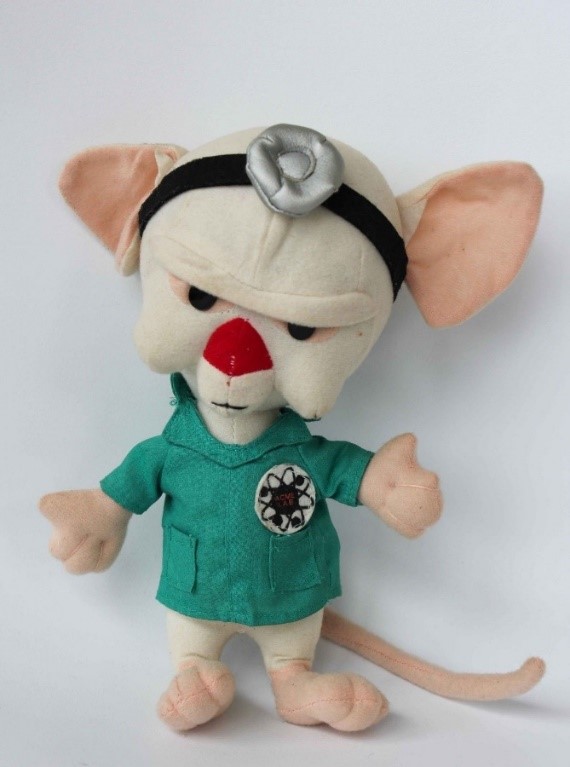
I choose not to say a word, for the gods of irony do speak volumes in my stead

Of course the doll is a better poet than me.

For years Shakespeare was represented in film by the likes of Sir Laurence Olivier and Orson Welles. Geniuses both, their films masterpieces all…

…Masterpieces most, but also not particularly accessible, what with their haughty performances, slow pacing and overall portentous weight. Great if your snob like me, annoying if you’re a normal person (actually I don’t like Olivier movies, don’t tell my snob friends). They basically represent everything people fear Shakespeare is, artsy fartsy crap aimed at the criminally highbrow, more essays than entertainment.

Everything changed in 1989 with one film, and more importantly one filmmaker:

Celebrated Shakespearian actor Kenneth Branagh made his stunning film debut with his adaptation of Henry V, Shakespeare’s rousing war story, previously adapted by Olivier in 1944 as a piece of British military propaganda made at the behest of Winston Churchill (yes, really). Branagh, in contrast, adapts the play as an anti-war film, highlighted by gritty and true to life battle scenes. He also put together a cast of A-list stars who deliver the lines in a natural, accessible way that makes the dialogue easy to comprehend even if you don’t understand every word. The dialogue and scenes are also delivered with a more cinematic pace, bolstered by engaging cinematography and Patrick Doyle’s magnificent score. The result is a Shakespeare adaptation that spoke directly to the mainstream audience, rather than down to them.

The outcome of these decisions was a critical and financial success, which led to a decade long renaissance of Shakespeare adaptations that cribbed from Branagh’s style. A-list celebrities, contemporary settings and modern film pacing was the order of the day, and the result is a conga line of films that crushed the line between the intellectual and the accessible.

I’m not going to go into that much detail about many of these films, mostly because I’ll probably write about a lot of them individually in the future. I’m more interested in overall trends of this era of adaptations. I also recommend looking up the cast lists for all of these movies because pretty much all of them feature an all-star cast turning in great performances and listing all of them would take too long.

One of the things that can make Shakespeare a difficult pill to swallow is that his most famous plays are his tragedies. People tend to forget about all the light comedies he wrote, works far more digestible to the casual viewer. The 90’s, however, did not forget, and we got some high quality and very audience friendly adaptions. First and foremost was Kenneth Branagh returning for his bombastic take on Much Ado About Nothing, a pastoral rom-com that zeroed in on his dynamic with his then wife Emma Thompson. Branagh and Thompson as intellectual rivals-turned-lovers Benedick and Beatrice make for some of all-time best Shakespeare screen acting, their every scene sizzling with wit that makes the language as easy to follow as it has ever been. Another comedy was gender-bender comedy Twelfth Night, adapted by Trevor Nunn. The movie is an enjoyable one, but it is made impressive by the fact that the central joke survives the adaptation process, as the central joke of the shenanigans born from a woman pretending to be a man is a very stage specific concept, potentially ruined by having a camera clearly showing the lead actress and making it more difficult to swallow that anyone could mistake her for a man. However, the breezy feel of the movie, as well as the strength of the performances, carries it and allows the film to stand as the light fun it is meant to be. Unfortunately the most beloved of all Shakespeare comedies, A Midsummer Night’s Dream, was adapted in 1999 by Michael Hoffman to underwhelming effect. It’s pretty, well cast and uses the anachronistic stylings of 90’s Shakespeare to amusing effect, but none of it sticks together and it ends up pretty underwhelming. Still, not a bad rainy afternoon flick.

Another method of making the bard more digestible was to give Shakespeare plays a more modern setting. For example, Richard Loncraine’s Richard III moved the play’s historical setting to World War II era, turning Sir Ian McKellen’s (freaking top notch) take on the titular character into an analogue for the rise of Hitler. The result is uneven but very enjoyable. The most significant example of this stylistic choice, though, is Baz Luhrmann’s vision of Romeo and Juliet. Romeo + Juliet (I have no idea why the plus is in the title) takes the old teen tragedy and tries to make it more relevant to modern teens by setting it in…well, it’s not really Miami, more Miami through the filter of MTV, Nickelodeon and Spring Break videos. There is something inspired about this approach, though it comes with an obvious problem: The film is already dated in its approach, it’s vision of modern teens having only applied to its own generation. It does work as a time capsule of that era though, the dated fashions and aesthetic carried by the timeless story and text. Granted, the text is marred by the fact that Leonard DiCaprio and Clair Danes struggle with the language from beginning to end, resulting in performances that fluctuate between stilted and over-the-top as they try and compensate for their inability to naturally deliver the dialogue, a problem made even more baffling by the fact that most of the supporting cast does not share this problem (particularly Harold Perrineau’s practically peerless Mercutio). That fluctuation is characteristic of the movie, which bounces from inspired to annoying and back again constantly. If nothing else it is memorable, I suppose.

There was also a whole subgenre of adaptations would excise the text entirely, instead taking the story of a Shakespeare play and applying it to an entirely modern film, usually an entry of a then-popular film trend. These tended to be very loose adaptations that used the concepts of the plays and applied them to very modern stories. For example, Gil Junger’s 10 Things I Hate About You was a high school comedy of the She’s All That vein that loosely adapted Shakespeare’s notoriously repugnant romantic comedy The Taming of the Shew. The movie only really adapted the basic set up of the play, seeing Julia Stiles and Heath Ledger playing off-putting loners who form a touching relationship based on mutual understanding and empathy, rather than the plays ugly story of a weird man putting a difficult woman in her place. Also of note was My Own Private Idaho, Gus Van Sant’s landmark entry in the New Queer Cinema movement (the rise of visible independent LGBTQ+ art in the 90’s). This films B-plot saw Keanu Reeves’ Scott, a street hustler and son of the local mayor, act out the story of Prince Hal form Henry the IV Parts 1 and 2. This worked shockingly well, demonstrating the relevance of the bard’s stories, that such an old tale can be married so affectingly to the most modern of concepts. On a less classy note there was Troma Studios’ Tromeo and Juliet, the first movie to be written by Guardians of the Galaxy’s James Gunn. This was the story of Romeo and Juliet filtered through the lens of Troma Studios’ house style of budgetless campy ultraviolence and intentionally offensive schlock. And of course, Disney’s The Lion King, directed by Roger Allers and Rob Minkoff, cribbed heavily from Hamlet to box office shattering effect (The Lion King also has a lot of Henry IV in it but that’s neither here nor there).

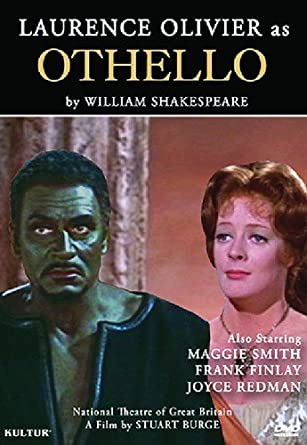
I couldn’t find a subcategory in which to fit Oliver Parker’s Othello, which is a pretty straightforward adaptation, but it is pretty good and notable as one of the bizarrely few adaptations where Othello is played by a black actor (Laurence Fishbourne, magnificent), as opposed to…

…Yeah.

Franco Zeffirelli returned to Shakespeare after his definitive 1968 adaptation of Romeo and Juliet with a new version of Hamlet starring Mel Gibson.

People will tell it’s good.

People are lying to you.

Speaking of Hamlet, Kenneth Branagh made yet another splash with his own take on the bard’s masterpiece. Branagh’s Hamlet is notable for using the full play, where most adaptations cut large swaths out, often leaving out whole characters and subplots. The result is a 4-hour long epic that benefits fully from Branagh’s energetic direction, gorgeous set design, a ridiculously star studded cast that sees A-list actors in even the most incidental roles, and Patrick Doyle turning in another top notch score (he also did that in Much Ado About Nothing, I forgot to mention that). This combination of elements means the movie demands your attention at every moment, making it difficult to nod off in spite of the intimidating run time. It’s a tough sit but a deeply rewarding one, a crown jewel of this era.

If there could be said to be an endpoint for this trend, it would have to be Julie Taymor’s adaptation of Titus Andronicus, simply titled Titus

…You know what? I can’t sum up Titus in brief. That’s for a future post. For now, let’s leave it at this: The woman who created The Lion King’s Broadway show made a movie out of Shakespeare’s worst play. The result, as could be expected, was a lot. And it is glorious.

Also, I would be remiss not to mention that a badly dubbed 1960’s German TV adaptation of Hamlet was featured and riffed in an episode of Mystery Science Theater 3000. Nothing to add, just wanted to bring it up.

It should be said that this era of Shakespeare movies did not just stop with the 90’s. The early 2000’s saw a series of misfires that resulted in the trend petering out. These included but where not limited to Michael Almereyda’s occasionally clever but mostly lame version of Hamlet, starring Ethan Hawke, set in the modern day, and notable as a deeply effective cure for insomnia. In the loose adaptation category was O, a modern version of Othello set in a high school. It is a product of the post Columbine age and an interesting and well-intentioned exploration of teen violence but ends up a deeply unpleasant misfire. It tries to be a commentary on modern racism and sociopathy in the preppy school setting, but the events of the play end up severely counterproductive to that theme and the results are ugly and confused. Rounding us off is another Kenneth Branagh joint, this time an ambitious adaptation that turns the rather underwhelming romantic comedy Love’s Labor’s Lost into a jukebox musical. Yes, this is a movie where actors speak in Shakespearean dialect until they suddenly break into showtunes of 1930’s musical numbers lifted from the likes of Irving Berlin and Cole Porter. I’d be lying if I said it worked, but I’d also be lying if I said it wasn’t kind of fun. At the very least it’s hard not to appreciate what an obvious labor of love it is, though fittingly it was ultimately a loss. The critical and financial disappointment of Love’s Labor’s Lost pretty much put the brakes on Branagh’s momentum, and he ultimately only made one more Shakespeare adaptation, that being As You Like It. This one is good but unremarkable, retaining Branagh’s characteristic joyful energy and engaging cinematography and performances, but lacking the spark of his earlier work.

So what point am I making with all this? Well…


…Uh…

Could it be that you are locked in your house and just had a film marathon to keep yourself from going crazy and you wanted to get an article out of it so you could claim to have been productive?

…Yeah, not much more too it than that. So consider this a recommendation list while we are stuck inside in these trying times. Basically everything I have discussed (save the post 90’s paragraph) are enjoyable, accessible and worth watching, so if you are averse to Shakespeare maybe now is the time to take a step outside your comfort zone. You may be surprised.

P.S. It has come to my attention that in 1990 there was an adaptation of Romeo and Juliet filmed in Venice starring feral cats. Yes, really, director Armondo Linus Acosta filmed local cats, got Shakespearean actors like John Hurt and Maggie Smith to overdub them and set it to classic orchestra (Hurt also plays the crazy cat lady who oversees the cats). It seems like you cannot see this movie anywhere, but I declare it the greatest thing ever anyway. Here is the trailer, watch it and weep.

The Troubling Turbulence of the Daniel Craig Bond Films (part 1).

I have been a lifelong fan of the James Bond film series, thanks mostly to coming from a family of Bond fans (all the family members with XY chromosomes anyway). It’s far from my favorite franchise but I have always at least maintained a casual interest. However, what tripped me up was the reboot series starring Daniel Craig.

Craig’s debut film, Casino Royale, while an instant classic amongst many Bond fans, immediately rung hollow for me. Few things make me lose interest in a franchise product quicker than the words “gritty reboot”. I am of the opinion that if a franchise has been going for decades than it is safe to assume that it is doing something right, and that completely upending the formula for the sake of chasing mainstream trends is the best way to smother it to death.

But now, four movies into Craig’s tenure with the fifth and final entry coming soon…

Sad trombone music.

…And given the benefit of seeing the new direction play out, Craig having some of the best entries in the whole series to his name, I have to admit…

…That I was one hundred percent right.

Woah, swerve!

That’s not your usual vernacular.

Oh, right. Uhhh… what an utterly astonishing deviation!’

That’s better. But yeah, while some good has come of it I believe that the general philosophies that have driven the Daniel Craig Bond era have done more harm than good for the future of the James Bond franchise. Why? Well you better keep reading and find out, eh?

…Please come back.

First, Let’s be clear; in spite of my initial misgivings, Casino Royale is a masterpiece. It is not my favorite Bond movie, but it is probably the best, as well as one of the greatest spy movies of all time. It is engrossing from beginning to end, overflowing with both compelling character work and some of the most thrilling action scenes of the 2000’s. Every action scene is gritty and visceral, hitting that perfect line where I feel like I need to catch my breath by the end of each one without feeling outright exhausted. All the characters are great, particularly Eva Green as the complex and tragic Bond Girl Vesper Lynd and Mads Mikkelsen as the weaselly but unspeakably creepy and intimidating villain Le Chiffre. The movie also made the wise decision to retain some of the best elements of the Peirce Brosnan era, notably the incomparable Dame Judi Dench as M and composer David Arnold, whose scores are always exhilarating if lacking in subtlety. And while the more book accurate cold-blooded James Bond is a thoroughly uninteresting idea to me, I’ll be damned if Daniel Craig doesn’t make it work, especially given that he doesn’t stop at just being superficially darker (Dear Timothy Dalton; take notes). His Bond is a fresh 00 agent, an immensely skilled but arrogant and cocksure man whose arc sees him becoming the professional agent we all know and love through brutal defeats and emotional hardship. I know that sounds simple, but it is really compelling in execution, by far the most interesting arc 007 has ever gotten on screen (save perhaps another Craig movie down the line but we’ll get there). Seriously, if you haven’t seen this movie just do it, even if Bond isn’t to your taste.

And then Quantum of Solace happened.

The Bond series has a weird problem with direct sequels. This is not just an issue with the Craig films, any time a Bond movie has a direct follow up it is pretty much guaranteed to be a flaming disaster that drags the good movie it is following along with it. I think specifically of Diamonds are Forever, a uber-campy mess that I can actually quite enjoy on its own, but it is ruined by the fact that it is a direct sequel to the beautiful and tragic On Her Majesty’s Secret Service. For context, imagine if Gone with the Wind was directly followed by The Great Race.

Quantum of Solace has a similar problem. Any forgiveness I could give to this movies faults, of which there are many, is negated by the fact that this film is wrapping up the hanging threads left by Casino Royale, and it wraps them up so badly that it retroactively hurts the previous good movie. This is the risk of a more ongoing narrative, especially in a series like Bond where the films are made one at a time with no real thought given to future productions. Add this to the fact that Quantum went into production during a writer’s strike, resulting in large swaths of the script being written by director Marc Foster and Daniel Craig himself, and you have a recipe for a stinker. And the results speak for themselves, with the mysterious organization from the previous film being revealed to have been led by some stupid goober that wouldn’t be a threat to Johnny English let alone James Bond, and revealing the desperate, tragic story of Vesper Lynd to have just been the manipulations of some guy who apparently romances women into betraying they’re country as his 9 to 5. Because what better way to wrap up the story of such a strong and complex female character than to remove any and all agency from her choices? Also the villain plan of the movie turns out to be making backdoor deals to gain a monopoly on Bolivian water, which kind of represents the problem with more realistic Bond; yes, this is something that happens in real life, but it doesn’t make for terribly exciting stakes for an action movie. I don’t know, maybe this could have worked, but this movie executes every idea it has as badly as possible, so whatever.

I might be willing to give the script some leeway due to the aforementioned shitty circumstances of the writing, but I do not because the direction is equally awful. Quantum of Solace is a butt ugly movie. Compared to the grandiose cinematography of Casino Royale there is scarcely a shot in Quantum that isn’t claustrophobic and generally unappealing. It doesn’t help that this movie treats earth tones as a religion, with grays, browns, beige’s and dull whites permeating pretty much every environment. Even places from the last movie, like the MI6 offices, have been changed to be more dull and monochromatic. It says something when shots of characters walking through a desert are by far the most visually appealing material in the film. And I can’t show the editing, but take my word that it is horrific; frenetic, choppy and frequently breaking the rule of eye tracing so the quick shots can be a genuine pain to try and follow, especially in action scenes. Considering a big part of the Bond series’ appeal is the travelogue scenery porn, looking this ugly is about the biggest sin the series can commit. A series known for its elegant and classy action looks and feels like it takes place inside of a dirty bong.

The only nice thing I can say about this movie is that the cast is still on top form, with Craig and Dench still in top form in spite of the material, and Olga Kurylenko plays easily one of the best Bond Girls in the entire series, a major bright spot in the otherwise dreary mess. It is also by far the shortest of the Craig movies, which will seem like an incomparable mercy down the line. Oh, and David Arnold’s score is enjoyable as always.

So do I have a point beyond just wanting to be mean to Quantum of Solace? Well, yes. That being that this movie represents the first problem with the new philosophy of the Bond movies: if you’re going to all dark and realistic you have no choice but to make a great product. Let’s be honest; a large chunk of the old Bond movies are pretty mediocre. I could probably count the great Bond movies on one hand. And yet almost every one of them are very watchable flicks. Even the most underwhelming Bond movie is still a fun time with worthwhile elements. But Quantum of Solace is so stupid, so po-faced in its stupidity, so devoid of anything positive to latch on to unless you think that being serious and realistic automatically equates to quality (and I have met a distressing amount of people who do. Not a one of them making for engaging discussion I should add). 

And a cursory look behind the scenes reveals the problem; just like these fans, Marc Foster seems to have been a slave to the idea that “realistic” automatically equates to quality. So the claustrophobic cinematography and ugly sets? “more realistic”. The underwhelming stakes? “Realistic”. The villain who is neither interesting nor intimidating? “Realistic”. The systematic undermining of every compelling element of the previous films story? …Okay, that one probably comes more from the lack of an actual writer than the realism thing, but still.

I feel I shouldn’t have to explain the flaws in that logic. Casino Royale was also more realistic, but Martin Campbell thought through how to make that work to his advantage. He used the and darkness and grit to make the movie more exiting and emotionally engrossing. It’s impressive how Casino Royale zigs everywhere Quantum of Solace zags.

My point is that while this new style can make for better movies than the old, the simple fact is that you have to nail it or it just doesn’t work. Old Bond only needed to be a fun time to be worthwhile. New Bond needs to be thought provoking, breathtaking, audacious and above all an event. It can’t be just another Bond flick; it needs to blow your mind every time. And the problem is that if it fails to meet that high standard than it just ends up as a worthless product. And Bond should never be worthless, damnit. This style sets a really high bar, and I just don’t think the Bond series can survive long term having to reach that bar every time. And what is to come does not prove me wrong.

This is running really long and there are still two more movies and lots more philosophical problems to go over, So I’m going to show you mercy and split this one in half. Next post I will go over Skyfall, Spectre, pontificate on how No Time to Die looks, and complete my thoughts on the problems of the Daniel Craig Bond era. See you then.

We need to talk about Daenerys Or: A rant on Dany T

Warning: The following was written in half an hour in a confused frenzy and may not be coherent.

May be less coherent than usual. 

…Okay, you know what? I know I said no season 8 rants, but just indulge me. How on God’s green earth did D&D botch Daenerys’s character so hard?

Here’s the thing: in the books, where we have access to Daenerys’s thoughts, there is a clear build up to an eventual downfall. We can see her becoming increasingly narcissistic in her motivations, and she seems poised to become just as much of a monster as all of her stupid ancestors without even noticing it. It’s all quite smart storytelling. Unfortunately the show is run by a pair of clowns who literally think that stories being about something is for chumps and that it is more important to be surprising than coherent, so Daenerys’s turn to mad queen is given no sufficient build up because D&D either forgot to build up to it or deliberately didn’t do so in order to avoid fans figuring out where the story was going. Either way, it’s stupid and frustrating and these two have no idea how storytelling is supposed to work and it ruined the entire last season.

What really annoys me is that it would have been SO easy to make this work. Look, the thing with Daenerys is that she sees herself as a champion of the oppressed. She is merciless to her opposers because she learned the hard way that showing mercy to your enemies is a good way to get stabbed in the back, which by the way is why no, her caviler attitude toward executions was not any kind of foreshadowing to her fall. In a kingdom like Westeros executions are an ugly but necessary part of being a leader. For God’s sake, Ned Stark executed people without hesitation, and he’s the most morally righteous dude in this whole stupid universe. Check your moral preconceptions at the door and put yourself in the characters’ place before making dumb declarations about how killing your enemies means you’ve crossed the moral event horizon. Jeez.

Getting back to the point, other than all that Daenerys always drew a strict moral line; protect the innocent, destroy those who bring them harm. So no, it does not make a lick of sense that she would burn the citizens of King’s Landing because they would “never love her.” Like I said, that is the logical conclusion, but she was nowhere NEAR the point where her delusions had made the shift from “I must protect those who can’t protect themselves” to “I am a benevolent god and all must love me or burn.”

And what’s killing me is that the shift could have been more clearly made with one easy change, and it’s a change that needed to happen in general; don’t have the white walkers beaten so quickly and easily. I hate to rewrite the series because that’s always a tasteless and hacky thing to do, but I have no respect for D&D as artists, so fuck it here we go:

So maybe we start out on a regular giant battle with the white walkers, and it goes very badly. The Night King brings out the dragon and it lays waste to the armies, we lose a major character or two, it’s all very sad. While recovering the cast finds out that Cersei has betrayed them and decide that it is time to obtain her help, with force if necessary. They return to King’s Landing and threaten to burn it to the ground if Cersei doesn’t relent. She stubbornly calls their bluff, so Daenerys reluctantly goes through with it, raining dragon fire down on King’s Landing and its citizens until Cersei finally relents and joins the offensive against the white walkers. We see that Daenerys is at first ridden with guilt, but as those around her justify and rationalize using her powers this way she becomes more comfortable with the idea.

Battle with walkers goes down basically as it does in the series because if I try to fix THAT disaster we’ll be here all day and this has already gone on WAY too long. But afterward Cersei, being Cersei, goes right back to trying to take advantage of the situation and kill of the remaining characters to secure her rule. Daenerys realizes that Jon Snow’s true parentage is out, putting her own rule in jeopardy, so she flies of the handle, kills Cersei with massive collateral damage to King’s Landing so as to keep the population in fear of her, que the series’ downward spiral.

I’m not saying this rewrite fixes everything, there is far too much wrong with the final stretch of this show to make any kind of satisfying conclusion, much less with this sequence of events I pulled out my ass during this overlong stream-of-consciousness rant, but damnit that does work a little better, right? Because it’s something. There’s some kind of lead-in to the final sequence of events. Heck, this way Cersei actually does something in the last season, that’s nice, right?

Honestly, at first I was actually enjoying how bad season 8 was. I could never explain why the series had lost me without people arguing, saying I was wrong, saying it was still good. So sitting back and watching as the whole thing fell apart, as every bad decision I had tried so hard to explain came home to roost, that was the most fun I had been allowed to have with this series in a long time. But by the time the fall of Daenerys Targaryen had occurred, it was just depressing. It was depressing that a show that used to be this good had gotten this bad, this…this fucking lazy. The whole last act of the show makes me mad, because most everyone worked so hard and so passionately on it. Season 8 was a notorious production, a long and difficult shoot full of some of the most ridiculous amounts of effort any production could every put into a season of television. All that effort. All that passion. All of it from everyone. Except the people in charge. The people telling the story.

They

Were

So

FUCKING

Lazy.

I’ve seen people argue that the show wasn’t that bad because even at it’s worst it is so well made. The production is stunning, the effects immaculate, the actors never give anything other than their best. But here’s the thing some people don’t seem to understand, and I will certainly go into it at more detail at a later date: Writing. Is. Everything. A product with a bad script is a product broken at a fundamental level. If the script is bad, no amount of talent, effort or passion (unless the production basically ignores the script and improvises everything, there are examples of that that I will talk about at a later date). And the script of season 8 is some of the most shit-out dreck I have ever witnessed, the product of two men very obviously eager to be done with this show. Their only obvious interest being in subverting fan theories and expectations, rendering every payoff unsatisfying in a blatant disregard for decent storytelling. Their laziness let down everyone who had any actual passion for this show, from the production to the actors to the fans.

Even when I liked it, Game of Thrones was never really for me. I was never all that much into it. But so many people were. So many people cared so much about this show. And D&D, in a spectacular display of laziness mixed with egotism, let them all down. And for that, they have my seething contempt as creators.

It took the show dying for me to really care about it. And that…is not a great feeling, man.

Where Game of Thrones Lost Me: A Ramble

Mood

It’s funny how things work out.

When I decided to write this article, I was prepared for it to kill this blog before it even started to live.

“And the immediate 2 month hiatus didn’t do that?

I am one of THOSE people with Game of Thrones. You know, say it with me, “the first four seasons were great, then it became crap.” Not a terribly original thought, but a deeply contentious one all the same. And I thought that I was an idiot for putting it out there, that I was going too deep into the pop culture pool. I thought this was going to be elementary school dodgeball all over again, just everyone else surrounding me with their judgmental glares, laughing as they pelt me with ball of lead.

“Wait, LEAD!?!”

Budget cuts are a bitch. Anyway, then season 8 happened. And suddenly “Game of Thrones is poopoo garbage” became the common consensus. So now I can shit talk this show all I want with minimal resistance. So, you know, whoohoo. But never fear, dear reader, for this will not be a deconstruction of season 8 and what a dumpster fire it was. The internet has no deficit of those, and frankly there’s nothing I can add to that discussion. Game of Thrones season 8 isn’t just bad, it’s bad in a kind of depressingly standard way. There’s nothing to deconstruct because everything is so surface level, the failure is as basic as it gets. What can I say that you’re not already thinking?

No, I’m more interested in the deeper failings of this show, the fire under the hood, the broken themes that dragged the ever so buoyant quality of the show down the bottom of a sea made of broken dreams and the showrunners disgusting brain juice.

Basically, I want to talk about Jon Snow.

Specifically, I want to talk about Jon Snow’s damn parents.

To talk about this, I need to talk about the broader trope of oh-so-special characters and their oh-so-special parents. This is about as common as it gets in stories, going all the way back to the myths of old wherein basically every hero’s origin story was “Zeus is a man-slut, whatcha gonna do?” But the modern version of this trope, like most modern literature tropes, largely goes back to my man J. R.R. Tolkien.

I hate to be mistaken for dissing the fantasy genres OG, but Tolkien’s take on this whole trope kind of sort of shows what can go wrong with it. This is because…Well, I mean…The Lord of the Rings is one of the all-time great stories and I adore it, but it’s kind of…

It’s racist as balls, okay? It’s racist as a Klan meeting around H.P. Lovecraft’s grave and each Klansman is watching a major Let’s Player on their phone. It would be the president’s favorite book if the president could read.

“I like books with pictures in them.”

Of course you do.

This is especially unavoidable because the Peter Jackson films, otherwise perfect adaptations that leave out the books more questionable material…

Pictured: the most questionable of all material

…not only kept the racism of the book intact, but doubled down on it with visual coding. So the good humans who stick by the throne look like this…

And this…

While the bad humans who side with Sauron and Saruman look like…um…this…

And…oh god…this.

Yeah.

I should mention that this is almost certainly not the result of any intentional malice on the part of Jackson and the costume/makeup department, but instead it is what happens when you incorporate elements from older material without thinking through the implications. Loyalty to material is fine, but sometimes you have to know when to look at that material and go “Hey, wait a minute…”

See also…

The point I’m trying to make is that there is an ugly history of one of the most popular tropes in fiction is based in a very uniquely old-timey British ideas of superior breeding and divine right. It’s not great and most authors who engage in it don’t even realize that’s what their invoking because that’s how tropes work. We’re only recently starting to see a pushback against these ugly ideas in the mainstream, with recent films such as Star Wars: The Last Jedi and The Kid Who Would Be King actively subverting the trope. These films feature characters with missing parents who find themselves in an obvious heroes journey story, both of whom rationalize that their absentee parents must be some grand hero themselves who they must discover to find the truth about themselves, and both ultimately have to deal with the fact that their parents were absent because they sucked and they are special because the came from nothing, because they are heroic individuals in spite of coming from nothing.

It should also be noted that The Last Jedi got HUGE pushback from this plot detail, with people being so angry…not just disappointed, ANGRY…that Rey is not part of some special Jedi bloodline that LucasArts seems poised to retcon this twist in the upcoming Star Wars: The Rise of Skywalker, which would be the worst decision but that is a subject for another time. I don’t know what it says that people are so attached to this trope, but I’m pretty sure I don’t like it.

I assume no one had the same complains about The Kid Who Would Be King because no one saw it, but that’s another issue altogether.

So where was I? Oh, right, Jon Snow. Got sidetracked in the intro. Very professional. It’s a good blog everybody. 

JS was seemingly another bit of pushback against this trope. He is the most traditionally heroic character in the Game of Thrones. At least he is after his father, Ned Stark, who himself was so great, powerful and wise that he was capable of ending all the conflicts in the series before they even began…before he was killed because of the petty machinations of the other characters and his own insistence at keeping to his code of honor in a big statement of intent for the whole series (run-on sentence. More good blogging). So now Jon Snow is the new classic fantasy hero of the series. And he is also, as the series will never let us forget, a literal bastard. He is the son of Ned Stark and a mother whose identity Ned Stark took to the grave, most presume because it would bring shame to himself and/or Jon.

So there’s our pitch. Jon Snow is a traditional fantasy hero despite blood that is presumably quite tainted. Neat, throws away an old, ugly and overused trope and gives his character an obstacle to overcome in peoples prejudice toward the circumstances of his birth. All well and good and the foundation of a potentially fascinating character journey.

Then we found out the truth.

Jon, it turns out, is the son of Ned Stark’s sister and former king Rhaegar Targaryen. So Jon Snow isn’t just a product of fine breeding, he is in fact the inheritor of TWO royal bloodlines. So now Jon’s heroic nature and amazing battle skills are not a man becoming something special because of his own nature in spite of “tainted” blood, but instead he is super blood hybrid whose traits are 100% inherent.

It’s actually hard to put into words how much I hate this. This single handedly took Game of Thrones from a show that had lost its way but that I still tolerated and turned it into to a product I outright hated. It was a long time in the making, don’t get me wrong, but this was it. It was the utter ruination of one of the few characters who had not yet been screwed over by the showrunners after they ran out of book material to adapt. And the worst part is I can’t even blame those clowns for this. David Benioff and D.B. Weiss got to make the show because they correctly guessed Jon Snow’s true parentage. This is George R.R. Martin’s idea, his vision for the trajectory of the story. And I have actual difficulty accepting that.

Because George R.R. Martin is the good writer. He’s the one who has something to say with these characters. He’s the one interested in deconstructing fantasy tropes. He’s the one who surprises and excites the reader with his genuine insight into both fantasy and the more complicated machinations of real-life old English politics and warfare, mixing both into this wonderful tapestry that took the world by storm. And yet he decided to completely undermine the central deconstructive point of one of the main characters to instead double down on the inherently ugly idea of powerful royal bloodlines instead. I really don’t know what to do with that information. Not only did it kill the show for me, but even my enthusiasm for the books has basically died. Because who even knows what other awful decisions in the show are Martin’s and not the hack showrunner’s?

Maybe Tyrian is supposed to spend the rest of the story farting around being useless and losing all his wit and intellect. Maybe Bran’s story is meant to abruptly come to a halt after Hodor’s death and all his weird powers go completely unexplored forever. Maybe Jamie and Cersei are meant to not develop at all as characters and end right where they began. Maybe Arya is meant to just become a magic ninja successfully taking her revenge on all who have wronged her despite the fact that revenge in Game of Thrones never ends well for the person seeking it because that’s the whole point goddamnit. Hell, maybe Daenerys…

Okay, no, you know what, I know I said no season 8 rants, but screw it, we’re going to talk about Daenerys. But before we do I should wrap up this rambling article (I’m so sorry, I swear I thought I had a more coherent point to make when I started) by giving one bit of credit where it’s due; Jon Snow does not end up on the throne, and that is a good thing. That he ends up rejecting his heritage and instead returning to where he belongs in the night guard is the best possible ending for this character. I could complain for days about WHY he doesn’t end up on the throne and how his character trajectory renders both his resurrection and the parent reveal completely superfluous, but let’s just end on that positive note.

Continued in “Screw it, Let’s Talk About Danerys.”

Trilogy of the Dead: An Apocalypse in Three Openings

Well, hello there. My name is Dan, and welcome to the right side of my brain. As you may be aware, the right side of the brain is the artistic and creative side. So this is where all thoughts on the media I consume goes, a creative mixing pot of all my thoughts and observations on the art I love so much.

“Well, That’s really not…

Who asked you, Einstein? Let’s get a second opinion. From my own personal scientist.

“I’m a doll, you twit”

Alright, in actuality this is just a weaksauce gimmick for my blog that I will probably regret in a year. Moving right along, I wanted to start with something pretty simple. Let’s start with a super original observation; George A. Romero’s Dead Trilogy (Night of the Living Dead, Dawn of the Dead and Day of the Dead) are a trio of films that use socially conscious observational storytelling to brilliantly convey a three-act apocalypse. Yup, this is the kind of unique insight you can expect on this blog. Okay, so clearly this is an observation that has been made a thousand times, but only because it is not just true, but also wholly distinct even in the oversaturated zombie genre that these movies spawned. In fact, George Romero’s storytelling was so brilliant that the three-act apocalypse doesn’t just occur over three whole movies, but within the opening scenes alone. All three of these movies have some of the most effective openings I have ever seen, and the point of this article will be to explore why they are so brilliant, and how they single-handedly depict the three-act apocalypse. So, without further nonsense:

Night of the Living Dead’s opening is mundane, but thick with an atmosphere of dread. We open on siblings Barbara and Johnny visiting their father’s grave. The scene plays out slowly, with a lot of casual dialogue. The setting immediately gives off the sensation of death, which the characters naturally catching on to. Johnny teases Barbara about her childhood fear of the graveyard, eventually catching on to the fact that she is still afraid of it. This prompts him to tease her with the instantly iconic “they’re coming to get you, Barbara,” pointing out a shambling old man and teasing that he is a risen corpse before playfully running away. As Barbara walks after him the old man makes his way over to her and suddenly attacks her, and in that instant the horror begins. Johnny returns to fight off the zombie but dies in the skirmish, Barbara runs and drives for her life as the creature unrelentingly chases her in a long sequence that eventually leads her to the house where the rest of the film takes place.
As I pointed out in the summery, the most effective thing about this scene is how suddenly the apocalypse begins. Compare this to other zombie media like 28 Days Later, The Walking Dead, or even the remake of Dawn of the Dead. All of these products create a step by step descent from normalcy into hell. In Night of the Living Dead, we go from the mundane to a waking nightmare in an instant. In the greater scheme of the rest of the trilogy, we have witnessed the exact second the world began to end. This is it, no lead in, no explanation (I mean, the film does mention something about radiation from Venus, but that’s dumb and other movies disregard it). This quick descent is also effective for the scene itself, as the genuine shock and terror does a lot to mask a potentially silly chase, one which popularizes the trope of the running woman constantly falling down so as not to easily outrun her shambling pursuer. This is the most impressive thing about Night of the Living Dead in general, how the effective use of pacing and mood manages to lift up what could be an otherwise very hokey low budget horror flick.

Dawn of the Dead is very clever in how it captures the state of the entire world in a relatively confined space. We open in a news station where two of our main characters, Fran and Stephen, work. This scene handily establishes two important facts about the state of a world that is now some time into the zombie apocalypse. One is that in spite of the now uncontrolled outbreak society is still trying to hold together, and two is that it is badly failing. The studio is in total chaos. Everyone is arguing, no one is holding the place together, and we see all the “experts” being interviewed making it increasingly clear that no one has any answers about what is going on or how to handle it. The scene ends with Fran and Stephen abandoning ship in the stations helicopter. They eventually meet with SWAT team members Peter and Roger, who themselves have abandoned a housing project raid that went terribly wrong, with dead bodies the tenants refused to hand over coming to life and attacking them, and stressed SWAT members opening fire on living and living dead alike.

While Night of the Living Dead highlighted how individual people cannot cooperate even under the direst of circumstances, Dawn of the Dead turns its critical eye to human society as a whole. While this movie’s individuals do mostly fine on their own, we regularly get to witness the greater humanity seemingly going insane around them. Talk shows and interviews are full of bickering and conflicting statements, and our character’s morale is slowly drained as it becomes slowly clear that there is no hope of civilization holding together in this crisis. We see cops still committing racially motivated murders even in a project full of zombies and biker gangs still rebelliously destroying sanctuaries and attacking people with no real cause. While the Dead Trilogy is fundamentally about the dead overtaking the living, all three movies—but Dawn of the Dead especially—puts the true onus on the living for their own demise.

Day of the Dead, while generally considered a lesser film than its predecessors, has the most chilling opening of them all. Our leads, part of a group of scientists and soldiers holed up in a secure bunker to find a solution to the outbreak, go to a nearby town to search for survivors. As their calls echo through the town we are treated to a montage of total desolation. It’s the little things that really inform the world building of this scene. There is loads of money being blown along with the trash through the wind, visually equating the two. There is a newspaper with the headline THE DEAD WALK, indicating that it has not been too long since the outbreak began. An alligator on the steps of town hall are the only signs of life…until we see a lone figure walking the streets, then revealed as the handsome boy pictured above. More zombies begin to emerge from the surrounding buildings, the previously empty streets quickly becoming a sea of the living dead, and the protagonists dejectedly return to their sanctuary, having clearly been through this song and dance countless times in countless towns.

Day of the Dead is easily the grimmest of the trilogy, almost entirely based on this opening. The characters in this film are trying to find a solution to the zombie problem, but from the word go we see that there may be no humanity to meaningfully save anymore, a fact later confirmed when the head scientist calculates that the zombies outnumber humanity 400,000 to 1 at this point. On top of that we have the usual George Romero status quo where the remnants of humanity still can’t coexist, even in the most desperate possible circumstances, as the soldiers and scientists are constantly at each other’s throats over the lack of progress being made, basically all except the leads having been driven insane by cabin fever and stress by this point. We see that humanity could not change its ways no matter what, and ultimately the only solution offered by the film is for the few sane people left to just leave it all behind and take the opportunity to start over.

So, I have established why these openings set the tone and show the step-by-step downfall of humanity on their own and how that informs the films both individually and as a whole. But why does this matter? Well, I think what makes this so impressive is that for as perfect as it is, it is also not by design. All three of these movies were made almost a decade apart. They are essentially George Romeo making individual film essays about the way human civilization was declining in the 60’s, 70’s and 80’s respectively, all incidentally tied together by the ongoing zombie apocalypse, which he probably only returned to for the sake of keeping people watching. Yet the trilogy fits together more cohesively then some of the planned franchises I have seen.

I have written this trying to find an answer to what makes this work so well, but the only answer I can find is that George Romero was an obscenely talented artist who knew how to make potentially rote social commentary both interesting and entertaining, and who had a special talent for starting a story. It’s not much, but it’s always worthwhile to appreciate great artists where you can find them, so I guess if you or I can take anything from this unremarkable little write-up it’s that George Romero was great and will be missed. And that’s all I’ve got for today. Any input from the scientific end?

“You’re an ignoramus.”

I thought you weren’t real.

“Doesn’t make me wrong.”

 …See you next time.