
The Marvel Cinematic Universe has been a real double edged sword for the entertainment world, hasn’t it? On the one hand, you have the novelty of a series of consistently enjoyable products that all tie together in ways that are fun to follow. On the other hand, you have other film studios tripping over themselves to emulate Marvel’s success. Not only does this result in an oversaturated market, but the attempted franchises are basically always bad. In fact, I would say that the second best cinematic universe so far has been Legendary Pictures’ Monsterverse.
For those who don’t know, the Monsterverse is a shared universe of American blockbusters based primarily on the Godzilla franchise but also ties in other monster franchises like King Kong for good measure. And I will admit, calling it the second best cinematic universe right out of the gate is a little unfair, as it started in 2014 and only has three movies under it’s belt with a fourth on the way. But I think this is part of what makes it work better than the rest; it has yet to become as exhausting as the others.
One of the big problems with cinematic universes is that they tend to come out the gate with an already exhausting amount of works announced, all of which just seems funny when the first movie crashes and burns. The best example of this is from Universal Studios, who made multiple attempts to make an action franchise out of their classic monsters catalogue, only to crash and burn every time because, shock of all shocks, no one wanted to see superhero-style blockbusters out classy old horror characters, no matter how many big stars you line up in advance.

The Monsterverse was far less ambitious, coming out the gate with a new reboot of Godzilla, welcome after the notorious Mathew Broderick-led disaster from 1998, then revealing a four-film plan that is now about to see it’s completion. My intention is to look over the three movies released so far, look forward to the upcoming entry and speculate on the future of this franchise, because baseless speculation is the bread and butter of nerd blogs and I need to get with the times, man.
So without further adieu, let’s start with;
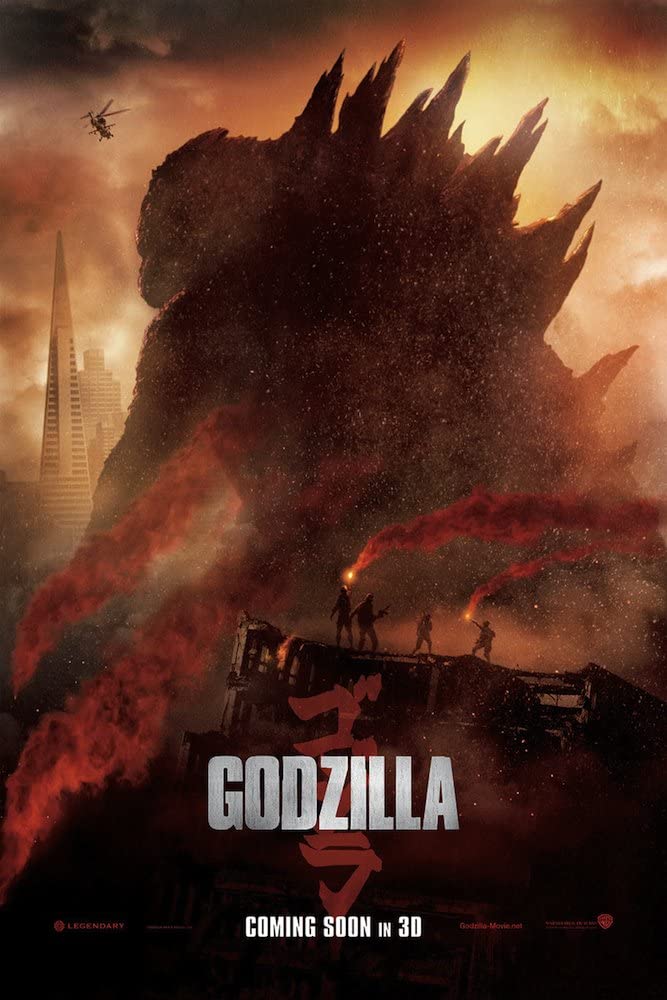
I’ve already brought up the Marvel movies in comparison to the Monsterverse, But Godzilla reminds be of particular early entry in that canon, that being Thor. This is because both movies are good, but both also suffer from playing their concepts a little too safe. Both were good enough on release, but I’d argue hindsight has been kind to neither.
Of course, Thor has one attraction that Godzilla doesn’t; Thor, for all it’s faults, is a light comedy, making it an easy way to kill an afternoon. This is in direct opposition to Godzilla, which takes itself veeery seriously.
This didn’t necessarily have to be a problem. If you’ve ever met a Godzilla fan then you’ve probably heard them go on and on about Godzilla was originally a metaphor for the destructive power of the atomic bomb from a very dark and complex art movie about Japan’s lingering fear of atomic atomic power. Sometimes it seems like all some of them talk about. A lot of nerds are insecure like that. But anyway yes, Godzilla has that legacy and making a more serious minded movie is not out of the question.
The problem with Godzilla is that the original movie was dark and serious because it had something to say. It was a heavy piece supported by interesting characters who shouldered the complex themes. This movie, by comparison, is a pretty run-of-the mill blockbuster, with a plot that more reflects the simpler, sillier Godzilla films of the 1960’s. Because of this the movie’s grim, portentous tone and constant holding back of it’s own spectacle ends up leaving it quite empty. Trading in mindless spectacle is one thing, but replacing it with basically nothing is where the issue lies.
I should say that even with all these problems, Godzilla is not a bad movie. I would dare say the first act is fantastic, immaculately building up to the giant monsters, held up by Bryan Cranston acting his heart out as the initial protagonist desperately searching for the reason for his wife’s death (spoilers: it may have had something to do with giant monsters). But then the monsters are unveiled, Cranston is killed off, and the rest of the movie follows Aaron Taylor Johnson as his son, who is an EOD in the Navy so that the rest of the movie can play out as a fucking recruitment ad where monsters occasionally show up.
Seriously, this is the real problem with the movie; the main stakes are Johnson trying to reunite with his all American nuclear family through the chaos of the mostly offscreen giant monster attacks, stakes made problematic by the fact that both him and the family are made as arch and personality-free as possible so as to make the audience relate to them, even though that’s not how relating to characters works and I thought we had hundreds of years of storytelling to learn that lesson but oh well. So throughout the movie we get the pleasure following a man it’s impossible to get attached to walking around the aftermaths of the stuff we actually want to see, instead just doing his very important duties off to the side. Even more embittering is the memory of Cranston and how good and interesting he was. Seriously, Breaking Bad had just ended and you just decide not to use your best and most marketable actor to the fullest potential, what were you thinking?
But hey, the U.S. Military give subsidies to movies that make them look good and this is a niche franchise so we gotta make money somehow I guess.
So yeah, my point is that the monsters not having a lot of screentime is not the problem. Honestly I think it could have been plenty, the movie is loaded with quality money shots of the big beasties and the fight at the end is pretty satisfying (if horrendously lit, especially on the home release where the contrast is turned way too low), but the decision to fill the gaps between monster action with a whole bunch of nothing makes this a hard one to want to go back to. Hopefully the director never made another movie with a heavy, portentous tone but no themes and flat characters with nothing to invest that instead carried itself entirely on empty spectacle to no real end.

I just realized I never even went into the monsters themselves. Godzilla is a sufficiently made reflection of what he’s supposed to be, dad bod aside. The enemy monsters, the MUTO’s, exist I guess. They get the job done. For as uninteresting as the are the movie actually does manage to get a pretty good and varied fight in the end, and let’s be fair that is kind of the main thing to get right in one of these movies so that’s cool. To be honest the movie itself provides little to talk about. It’s fine and the flaws that hold it back are all that is really interesting to ponder on. The result is that I’ve probably made this movie sound worse then it is, but dems the brakes.
Moving right along;
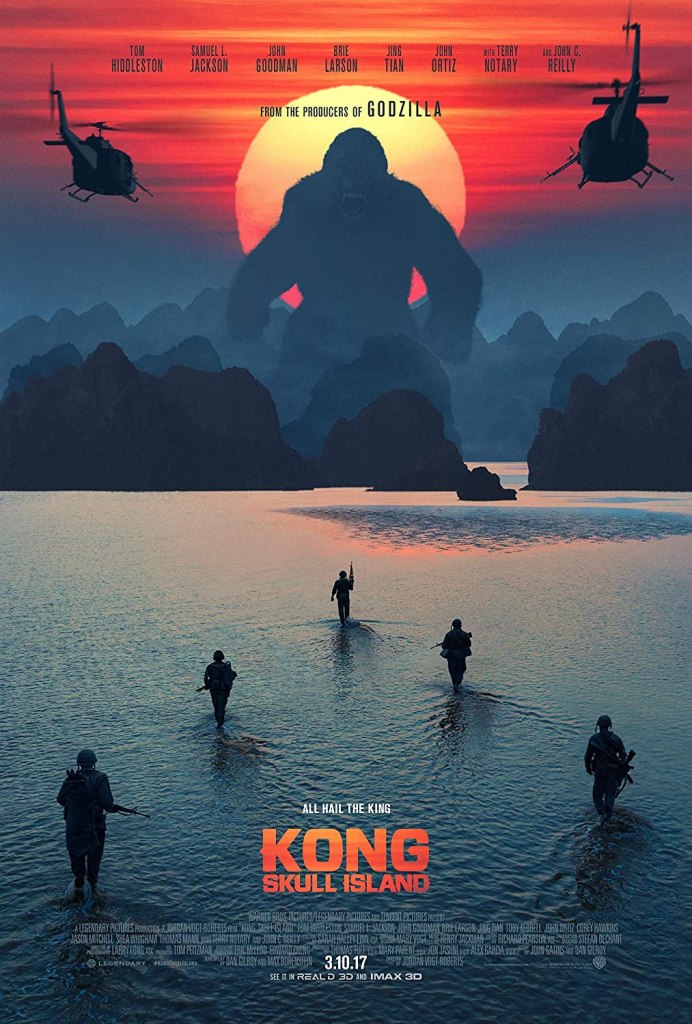
Kong: Skull Island is so good guys, like oh my god.
In direct opposition to Godzilla, Kong: Skull Island is an unapologetically unpretentious oldschool island monster romp, the kind that used to used line the shelves of video stores back when those where a thing but now made on a blockbuster budget. Yet also unlike Godzilla this one also has indulgences like themes and even the occasion fleshed out character. It’s just a whole package that I keep coming back to again and again.
In inevitable comparison to Peter Jackson’s epic remake of 1933’s King Kong, Skull Island feels more like a direct answer to the 1976 remake of the same movie, taking place in the same time period and filling in on the potential of that piece of crap. Whereas 1976 King Kong zeroed it’s focus on oil tycoons, environmentalism and celebrity culture (and mostly how they all sucked, seriously it is an unbelievably snotty and mean spirited movie for how shamelessly tacky and dumb it is), Skull Island focuses on the fallout of the recently ended Vietnam war.
And right off the bat, I will say that this is not a deep exploration of said war or it’s lingering effects on the 1970’s American consciousness. Those elements are there, but ultimately only serve as service level motivators for the characters. For instance, Samuel L. Jackson is playing a military colonel embittered by the shameful end to the war, while Brie Larson plays a war photographer, and as such is one of the people who helped end the war. This creates antipathy between the characters, but that never really goes anywhere. Still, it should go without saying that a lot of blockbusters can’t be bothered to think through their historical settings and how the characters should be informed by them to even that degree, so Skull Island is a cut above the rest by default. Three cheers for low standards?
But anyway, this setting informs the new take on Kong. Usually Kong is portrayed as the ultimate victim of colonialism, a godlike being who is carelessly torn away from his environment and destroyed by an American civilization that is more brutal and savage than he could ever be. In this movie the Vietnam stuff decontextualizes this dynamic. Kong is now seen as a new challenge for America’s wounded pride, with Samuel L. Jacksons character wanting to destroy him personally to make up for his perceived failure to win his war. Kong is titanic and indomitable enough that taking him down is seen as an accomplishment equal to his previous overseas conflict.
It’s no coincidence that the movie somewhat cleans up the Kong mythos. The natives of Skull Island, usually portrayed in a very negative light, from the blackface caricatures of the original movie to the weird monster people of Peter Jackson’s take, are here a more grounded and thoughtful take on a civilization untouched by colonialism. They peaceful and technologically accomplished, not even needing language to communicate. This also extends to the island wildlife, much of which are titanic, unthinkably beautiful ancient creatures that create a convincing ecosystem, rather than the chaos of destructive dinosaurs of most versions. Even the predatory creatures are fascinating parts of this ecosystem, and seemed not to be bothering anyone before these outside humans bumbled into their habitats and shot at them. Skull Island takes the eponymous place away from the colonial “lost world” myth and turns it into the fantasy of a piece of the world untouched by so-called “civilization”, a fantasy that would would be further explored to mainstream acclaim the next year in Black Panther.
Kong is turned into the guardian of this place, protecting it with loving ferocity both from the American soldiers who seek to tear it down for the sake of the top dog mentality that their country has so thoroughly beaten into them as well as the domestic threat of the reptilian Skull Crawlers. Unlike Godzilla‘s MUTO’s, a decent but arbitrary threat, the Skull Crawlers are a more thought through beast, the definition the apex predator, creatures from the depths of the Earth itself who would destroy the whole ecosystem of the island if not for Kong controlling their population. Admittedly the movie might have served better without them though. As I’ve alluded to the human antagonists are what give the real thematic meat of the movie, while the Skull Crawlers are just fodder for the obligatory monster fights. On the other hand they are some damn fine monster fights, particularly being the rare CGI monster movie to have all it’s fights take place in broad daylight (many use night time to cover up imperfections in the effects). The finale manages to be a fun and thrilling cap to the movie after the business with Jackson has been squared away. It helps that Kong is brought to life wonderfully, more animalistic that Andy Serkis’s version in the 2005 movie but still a likable, sympathetic character you easily root for as he fights both the gross enemy monsters and the arrogant humans. And let’s face it, seeing Kong encounter humans who mean him wrong and seeing him come up on top is just cathartic as hell after all these years.
But enough with the thinking crap, let’s talk about how this movie is durn purty, ya’ll. This movie frankly has no right looking as good as it does. Director Jordon Vaught Roberts goes above and beyond what is necessary. Skull Island bucks normal blockbuster conventions but being a well lit and colorful feast for the eyes. Apparently Hayao Miyazaki movies were a visual inspiration, and this really does come as close to visualizing that kind of pastoral beauty to live action as I have seen. The fact that such visual consideration was put into this dumb monster movie is the kind of thing I want to see encouraged, I want to see more directors do the best they can no matter what the project is, because it can really elevate the movie into a genuine classic.
I think I may have gone the opposite route of Godzilla and overhyped this one just a bit. It ultimately is just a monster movie, but it is a damn fine one that went out of it’s way to be everything it could be and I think that deserves my enthusiasm, damnit.
And hey, look at that, this ran long again. So you know the drill, rest of the article as fast as I can, hopefully before Godzilla vs. Kong comes out. ‘Till then, dear reader.
…
Crap, I didn’t even mention how good John C. Reilly is in Skull Island. How did I forget that, he’s like the heart and soul of whole thing, He’s so funny and sympathetic, what is wrong with me?
 The Right Side of Dan’s Brain
Enlightening and entertaining read. Thanks
You should consider writing a book sometime.
LikeLike