
I have no real lead-in to this subject, for the title should say all.
…
I tried to open in something resembling iambic pentameter. That was embarrassing. Please forget that it happened.
William Shakespeare’s relationship with mainstream culture is a strange contradiction. His works are probably the first thing that comes to mind when someone thinks of “high art”. Shakespeare plays are often rejected at first glance by non “highbrow” individuals, the language written off as an impenetrable jumble of strangely flowing thees and thous. I call this strange because Shakespeare is about as populist as a writer can be. I’ve heard him described as the Michael Bay of his time, and while that is certainly hyperbolic there is a grain of truth in it. Shakespeare’s plays are generally incredibly simple tales aimed at a mainstream audience. There is rarely anything to read into the stories beyond the surface level, and the surface level typically just consists of tales where a collection of people do really stupid things informed entirely by their emotions. If it’s a comedy everything works out, if it’s a tragedy it doesn’t. The only real barrier is the language, which I argue is like learning how to ride a bike or learn a new sport; it seems incomprehensible at first, but keep at it and it quickly becomes second nature. The biggest problem is that there is a lot of antiquated dialect, but almost every Shakespeare book I’ve every read comes with annotations explaining what the outdated words and phrases mean so that shouldn’t be much of an issue. Once you get past that the plays are just fun, engaging stories enhanced by the language, which once you get used to it is really wonderful to hear and say.
That being said, I do understand that it can be difficult to get into Shakespeare, especially since the source of first exposure matter a lot. You can be introduced one of three ways: read the text yourself, attend a play, or see one of the many, MANY film adaptations. This being this blog we are obviously going to talk about films. But my point is that first impressions mean a lot, and in the case of Shakespeare the greatest obstacle is that first impression coming from an obnoxious windbag.

What?
Of course the doll is a better poet than me.
For years Shakespeare was represented in film by the likes of Sir Laurence Olivier and Orson Welles. Geniuses both, their films masterpieces all…
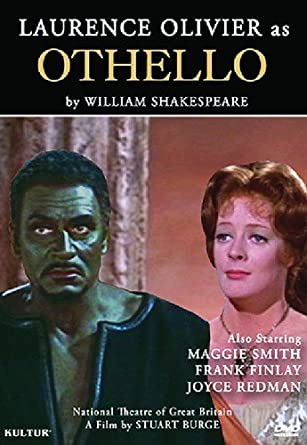
…Masterpieces most, but also not particularly accessible, what with their haughty performances, slow pacing and overall portentous weight. Great if your snob like me, annoying if you’re a normal person (actually I don’t like Olivier movies, don’t tell my snob friends). They basically represent everything people fear Shakespeare is, artsy fartsy crap aimed at the criminally highbrow, more essays than entertainment.
Everything changed in 1989 with one film, and more importantly one filmmaker:

Celebrated Shakespearian actor Kenneth Branagh made his stunning film debut with his adaptation of Henry V, Shakespeare’s rousing war story, previously adapted by Olivier in 1944 as a piece of British military propaganda made at the behest of Winston Churchill (yes, really). Branagh, in contrast, adapts the play as an anti-war film, highlighted by gritty and true to life battle scenes. He also put together a cast of A-list stars who deliver the lines in a natural, accessible way that makes the dialogue easy to comprehend even if you don’t understand every word. The dialogue and scenes are also delivered with a more cinematic pace, bolstered by engaging cinematography and Patrick Doyle’s magnificent score. The result is a Shakespeare adaptation that spoke directly to the mainstream audience, rather than down to them.
The outcome of these decisions was a critical and financial success, which led to a decade long renaissance of Shakespeare adaptations that cribbed from Branagh’s style. A-list celebrities, contemporary settings and modern film pacing was the order of the day, and the result is a conga line of films that crushed the line between the intellectual and the accessible.
I’m not going to go into that much detail about many of these films, mostly because I’ll probably write about a lot of them individually in the future. I’m more interested in overall trends of this era of adaptations. I also recommend looking up the cast lists for all of these movies because pretty much all of them feature an all-star cast turning in great performances and listing all of them would take too long.
One of the things that can make Shakespeare a difficult pill to swallow is that his most famous plays are his tragedies. People tend to forget about all the light comedies he wrote, works far more digestible to the casual viewer. The 90’s, however, did not forget, and we got some high quality and very audience friendly adaptions. First and foremost was Kenneth Branagh returning for his bombastic take on Much Ado About Nothing, a pastoral rom-com that zeroed in on his dynamic with his then wife Emma Thompson. Branagh and Thompson as intellectual rivals-turned-lovers Benedick and Beatrice make for some of all-time best Shakespeare screen acting, their every scene sizzling with wit that makes the language as easy to follow as it has ever been. Another comedy was gender-bender comedy Twelfth Night, adapted by Trevor Nunn. The movie is an enjoyable one, but it is made impressive by the fact that the central joke survives the adaptation process, as the central joke of the shenanigans born from a woman pretending to be a man is a very stage specific concept, potentially ruined by having a camera clearly showing the lead actress and making it more difficult to swallow that anyone could mistake her for a man. However, the breezy feel of the movie, as well as the strength of the performances, carries it and allows the film to stand as the light fun it is meant to be. Unfortunately the most beloved of all Shakespeare comedies, A Midsummer Night’s Dream, was adapted in 1999 by Michael Hoffman to underwhelming effect. It’s pretty, well cast and uses the anachronistic stylings of 90’s Shakespeare to amusing effect, but none of it sticks together and it ends up pretty underwhelming. Still, not a bad rainy afternoon flick.
Another method of making the bard more digestible was to give Shakespeare plays a more modern setting. For example, Richard Loncraine’s Richard III moved the play’s historical setting to World War II era, turning Sir Ian McKellen’s (freaking top notch) take on the titular character into an analogue for the rise of Hitler. The result is uneven but very enjoyable. The most significant example of this stylistic choice, though, is Baz Luhrmann’s vision of Romeo and Juliet. Romeo + Juliet (I have no idea why the plus is in the title) takes the old teen tragedy and tries to make it more relevant to modern teens by setting it in…well, it’s not really Miami, more Miami through the filter of MTV, Nickelodeon and Spring Break videos. There is something inspired about this approach, though it comes with an obvious problem: The film is already dated in its approach, it’s vision of modern teens having only applied to its own generation. It does work as a time capsule of that era though, the dated fashions and aesthetic carried by the timeless story and text. Granted, the text is marred by the fact that Leonard DiCaprio and Clair Danes struggle with the language from beginning to end, resulting in performances that fluctuate between stilted and over-the-top as they try and compensate for their inability to naturally deliver the dialogue, a problem made even more baffling by the fact that most of the supporting cast does not share this problem (particularly Harold Perrineau’s practically peerless Mercutio). That fluctuation is characteristic of the movie, which bounces from inspired to annoying and back again constantly. If nothing else it is memorable, I suppose.
There was also a whole subgenre of adaptations would excise the text entirely, instead taking the story of a Shakespeare play and applying it to an entirely modern film, usually an entry of a then-popular film trend. These tended to be very loose adaptations that used the concepts of the plays and applied them to very modern stories. For example, Gil Junger’s 10 Things I Hate About You was a high school comedy of the She’s All That vein that loosely adapted Shakespeare’s notoriously repugnant romantic comedy The Taming of the Shew. The movie only really adapted the basic set up of the play, seeing Julia Stiles and Heath Ledger playing off-putting loners who form a touching relationship based on mutual understanding and empathy, rather than the plays ugly story of a weird man putting a difficult woman in her place. Also of note was My Own Private Idaho, Gus Van Sant’s landmark entry in the New Queer Cinema movement (the rise of visible independent LGBTQ+ art in the 90’s). This films B-plot saw Keanu Reeves’ Scott, a street hustler and son of the local mayor, act out the story of Prince Hal form Henry the IV Parts 1 and 2. This worked shockingly well, demonstrating the relevance of the bard’s stories, that such an old tale can be married so affectingly to the most modern of concepts. On a less classy note there was Troma Studios’ Tromeo and Juliet, the first movie to be written by Guardians of the Galaxy’s James Gunn. This was the story of Romeo and Juliet filtered through the lens of Troma Studios’ house style of budgetless campy ultraviolence and intentionally offensive schlock. And of course, Disney’s The Lion King, directed by Roger Allers and Rob Minkoff, cribbed heavily from Hamlet to box office shattering effect (The Lion King also has a lot of Henry IV in it but that’s neither here nor there).
I couldn’t find a subcategory in which to fit Oliver Parker’s Othello, which is a pretty straightforward adaptation, but it is pretty good and notable as one of the bizarrely few adaptations where Othello is played by a black actor (Laurence Fishbourne, magnificent), as opposed to…
…Yeah.
Franco Zeffirelli returned to Shakespeare after his definitive 1968 adaptation of Romeo and Juliet with a new version of Hamlet starring Mel Gibson.
People will tell it’s good.
People are lying to you.
Speaking of Hamlet, Kenneth Branagh made yet another splash with his own take on the bard’s masterpiece. Branagh’s Hamlet is notable for using the full play, where most adaptations cut large swaths out, often leaving out whole characters and subplots. The result is a 4-hour long epic that benefits fully from Branagh’s energetic direction, gorgeous set design, a ridiculously star studded cast that sees A-list actors in even the most incidental roles, and Patrick Doyle turning in another top notch score (he also did that in Much Ado About Nothing, I forgot to mention that). This combination of elements means the movie demands your attention at every moment, making it difficult to nod off in spite of the intimidating run time. It’s a tough sit but a deeply rewarding one, a crown jewel of this era.
If there could be said to be an endpoint for this trend, it would have to be Julie Taymor’s adaptation of Titus Andronicus, simply titled Titus…
…You know what? I can’t sum up Titus in brief. That’s for a future post. For now, let’s leave it at this: The woman who created The Lion King’s Broadway show made a movie out of Shakespeare’s worst play. The result, as could be expected, was a lot. And it is glorious.
Also, I would be remiss not to mention that a badly dubbed 1960’s German TV adaptation of Hamlet was featured and riffed in an episode of Mystery Science Theater 3000. Nothing to add, just wanted to bring it up.
It should be said that this era of Shakespeare movies did not just stop with the 90’s. The early 2000’s saw a series of misfires that resulted in the trend petering out. These included but where not limited to Michael Almereyda’s occasionally clever but mostly lame version of Hamlet, starring Ethan Hawke, set in the modern day, and notable as a deeply effective cure for insomnia. In the loose adaptation category was O, a modern version of Othello set in a high school. It is a product of the post Columbine age and an interesting and well-intentioned exploration of teen violence but ends up a deeply unpleasant misfire. It tries to be a commentary on modern racism and sociopathy in the preppy school setting, but the events of the play end up severely counterproductive to that theme and the results are ugly and confused. Rounding us off is another Kenneth Branagh joint, this time an ambitious adaptation that turns the rather underwhelming romantic comedy Love’s Labor’s Lost into a jukebox musical. Yes, this is a movie where actors speak in Shakespearean dialect until they suddenly break into showtunes of 1930’s musical numbers lifted from the likes of Irving Berlin and Cole Porter. I’d be lying if I said it worked, but I’d also be lying if I said it wasn’t kind of fun. At the very least it’s hard not to appreciate what an obvious labor of love it is, though fittingly it was ultimately a loss. The critical and financial disappointment of Love’s Labor’s Lost pretty much put the brakes on Branagh’s momentum, and he ultimately only made one more Shakespeare adaptation, that being As You Like It. This one is good but unremarkable, retaining Branagh’s characteristic joyful energy and engaging cinematography and performances, but lacking the spark of his earlier work.
So what point am I making with all this? Well…
…
…Uh…

…Yeah, not much more too it than that. So consider this a recommendation list while we are stuck inside in these trying times. Basically everything I have discussed (save the post 90’s paragraph) are enjoyable, accessible and worth watching, so if you are averse to Shakespeare maybe now is the time to take a step outside your comfort zone. You may be surprised.
P.S. It has come to my attention that in 1990 there was an adaptation of Romeo and Juliet filmed in Venice starring feral cats. Yes, really, director Armondo Linus Acosta filmed local cats, got Shakespearean actors like John Hurt and Maggie Smith to overdub them and set it to classic orchestra (Hurt also plays the crazy cat lady who oversees the cats). It seems like you cannot see this movie anywhere, but I declare it the greatest thing ever anyway. Here is the trailer, watch it and weep.
 The Right Side of Dan’s Brain
You did it! 👏 I’m running this morning so will check it out later.
Sent from my iPhone
>
LikeLike
Oh, Daniel. That feline version of R&J was wild. And starring John Hurt!! I’ve never been a Shakespeare fan, but you’ve convinced me I’m missing some good movies. I could watch Kenneth Branagh all day.
LikeLike